Marta Lupica Spagnolo | Gerardo Mazzaferro | Angela Creese | Adrian Blackledge
Over two days in Turin we visit multiple research sites and speak to key personnel in organisations which work to value the talents and capital of people on the move and people in neighbourhood communities. We engage in lengthy conversations with creative practitioner activists. We also discuss plans for the Turin case study.
Day 1
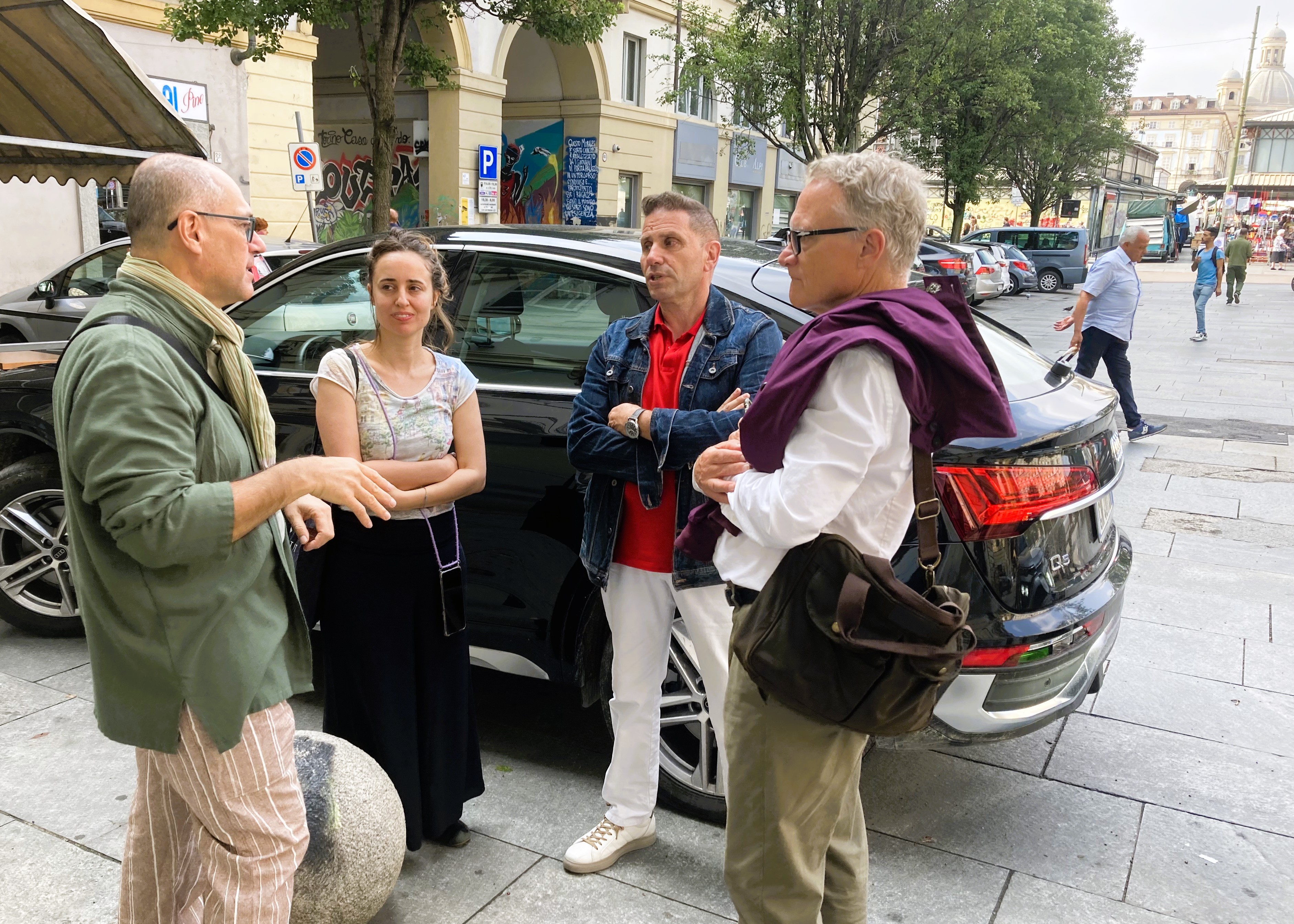
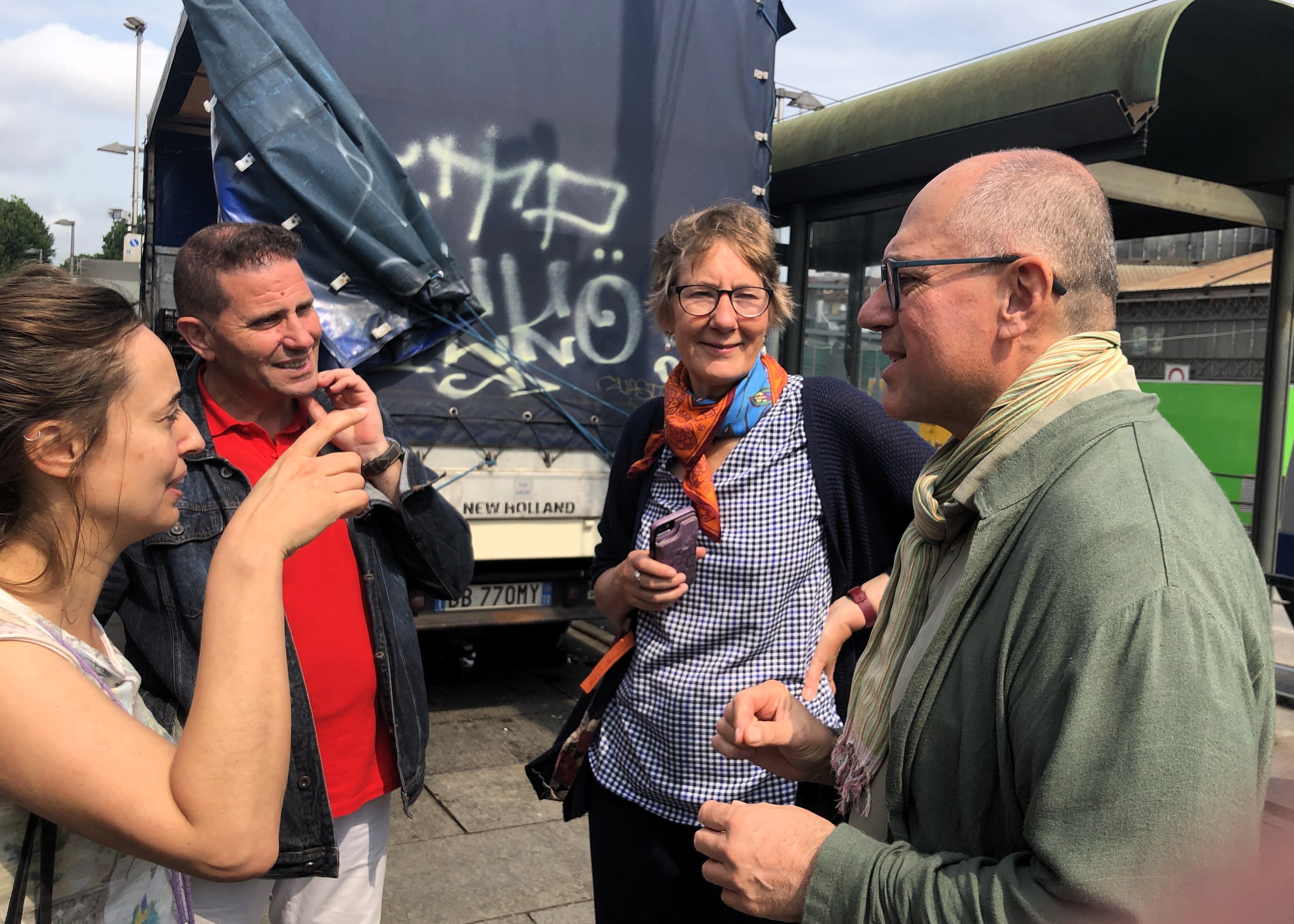
We meet Emanuele, coordinator of the Porta delle Culture Association, a growing network of more than twenty organisations which is developing a proposal to found an itinerant Museum of People on the Move. During a walkalong meeting around the neighbourhood of Porta Palazzo we discuss the rationale and challenges of the proposal.
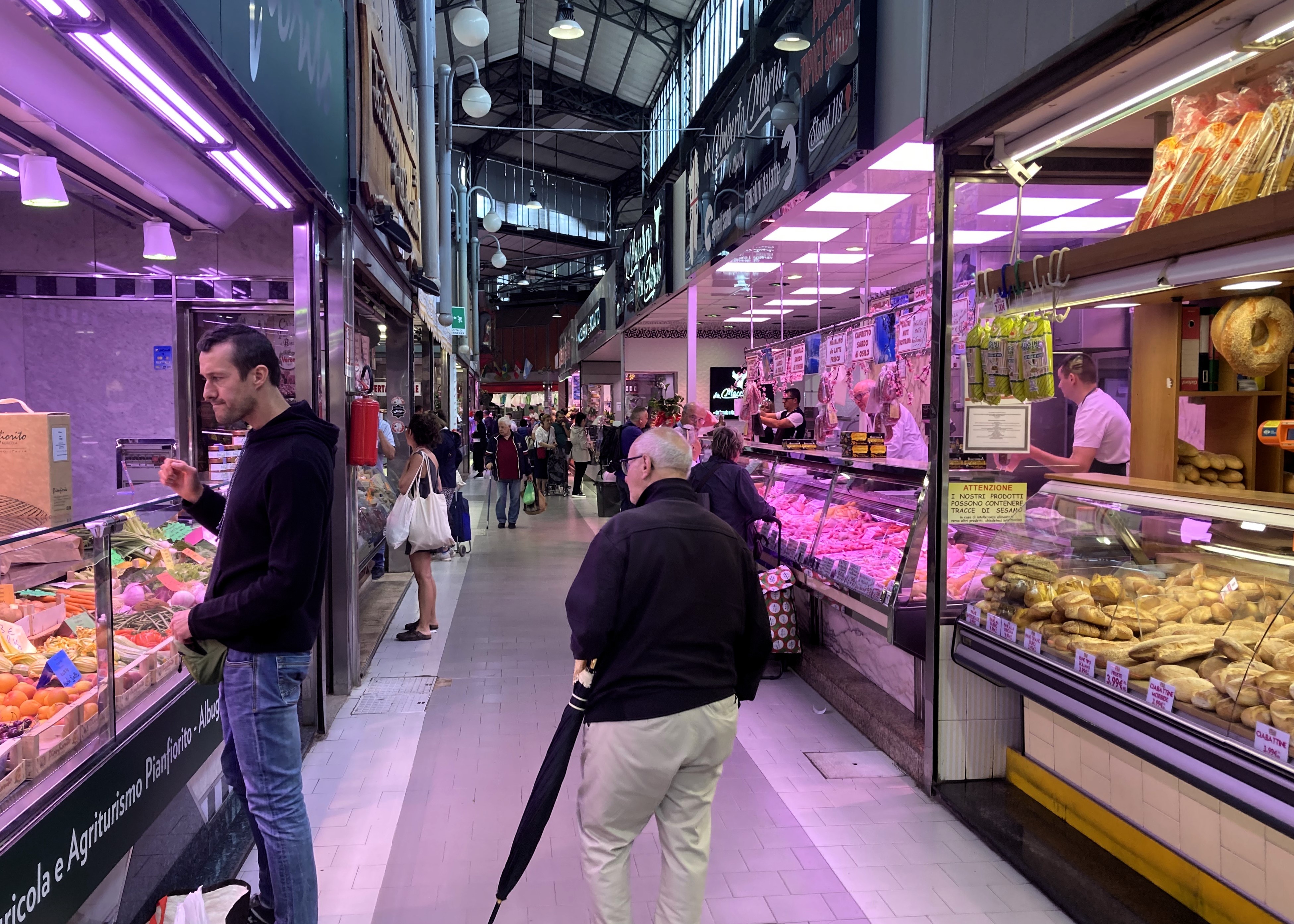
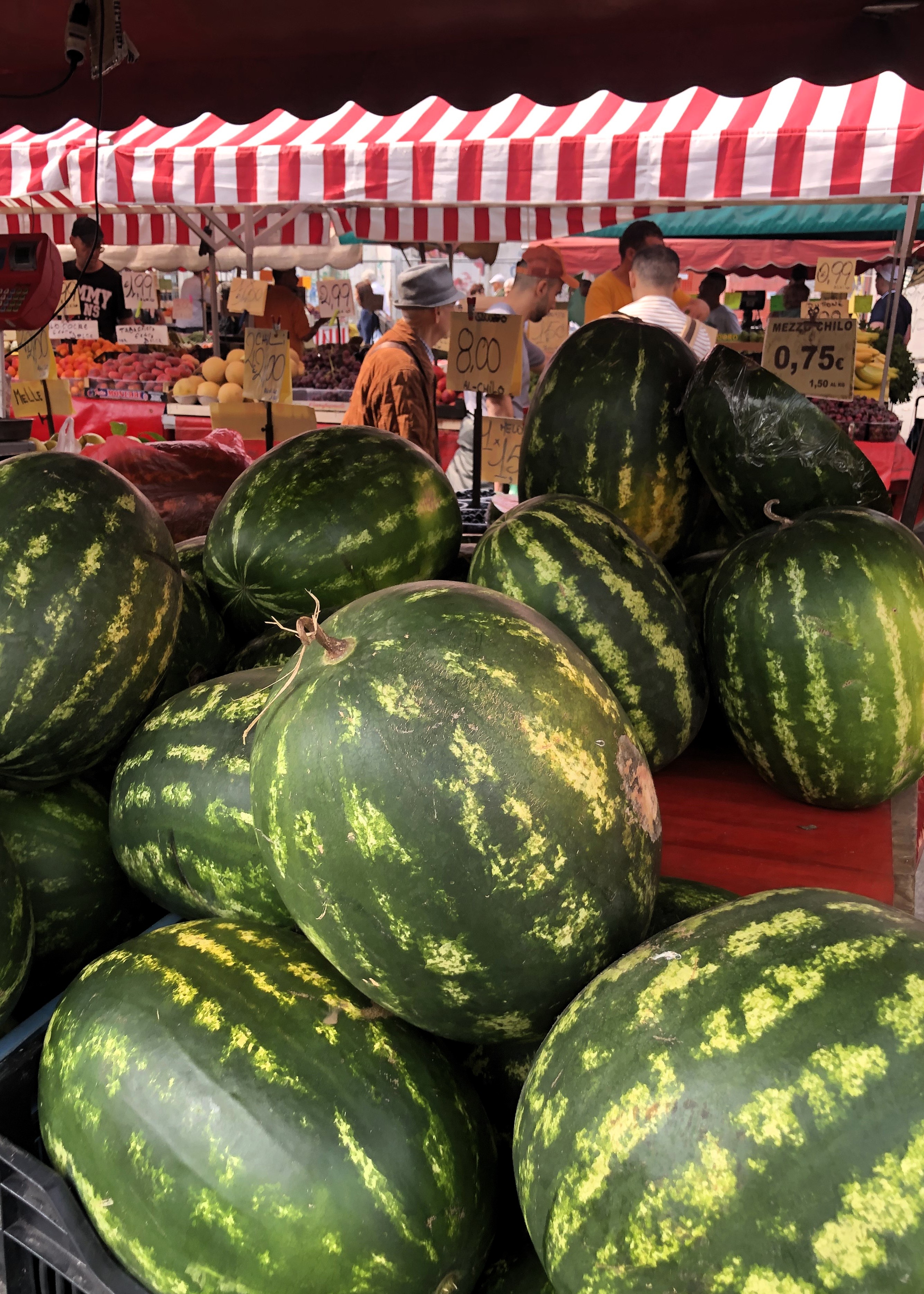
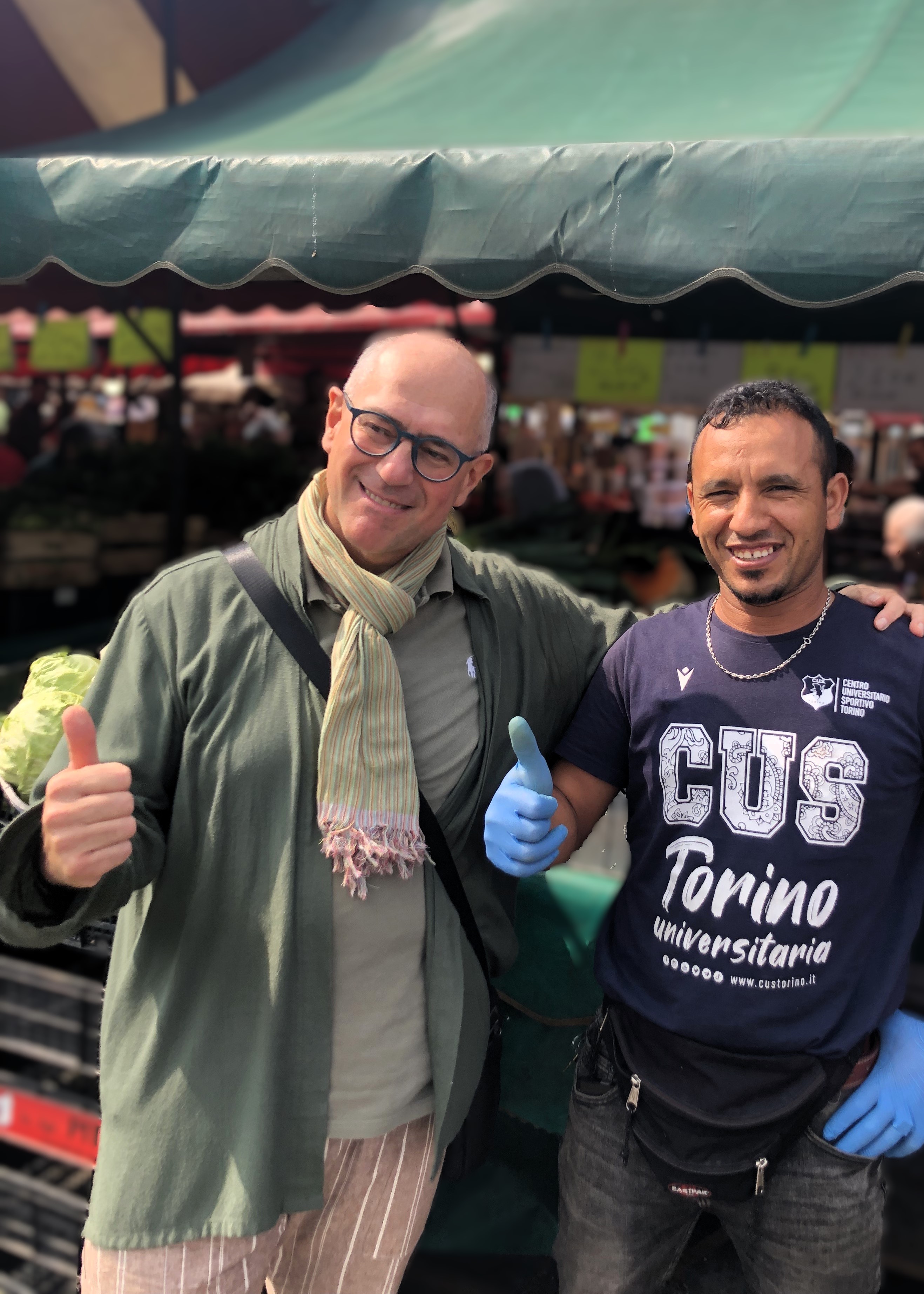
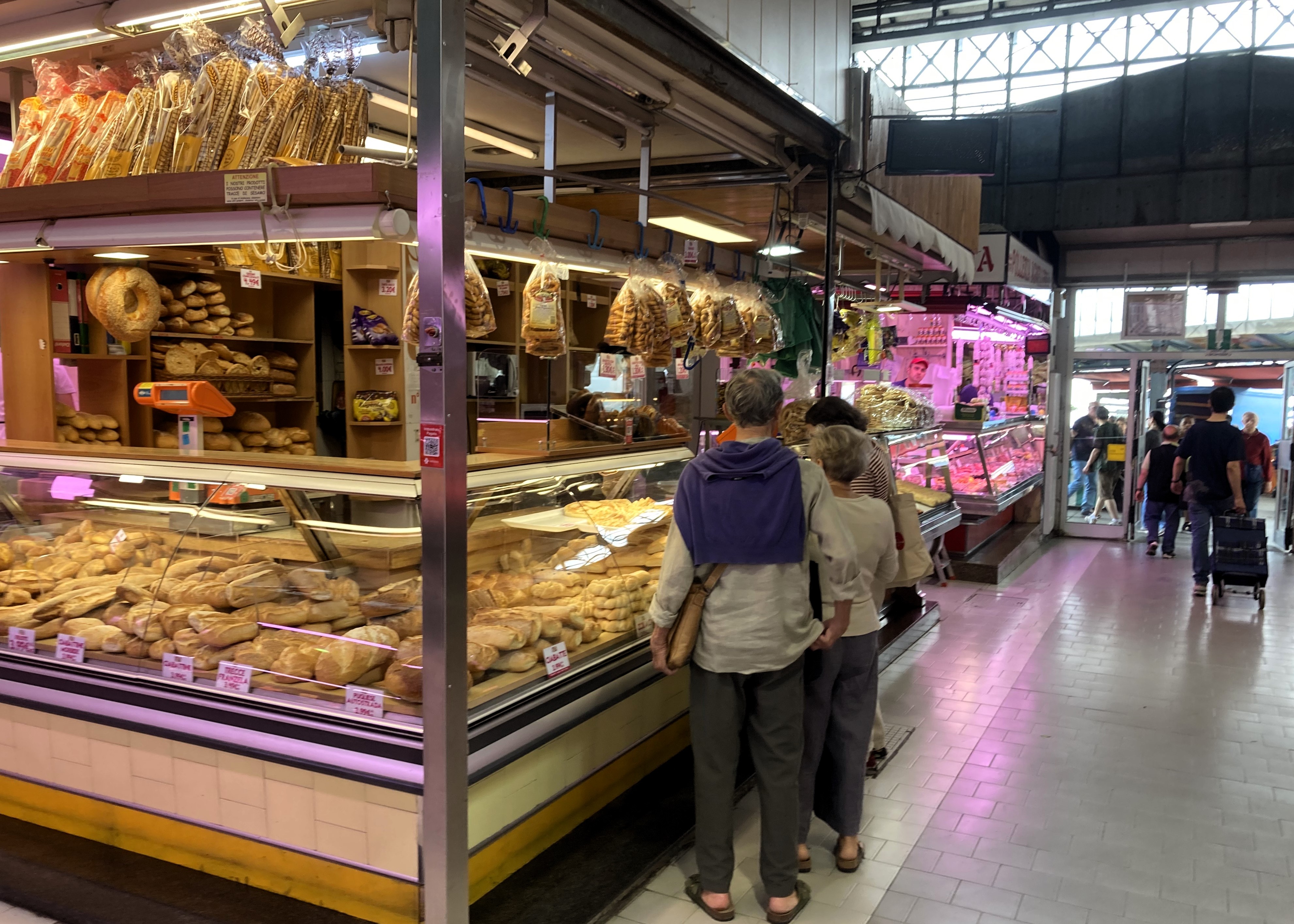
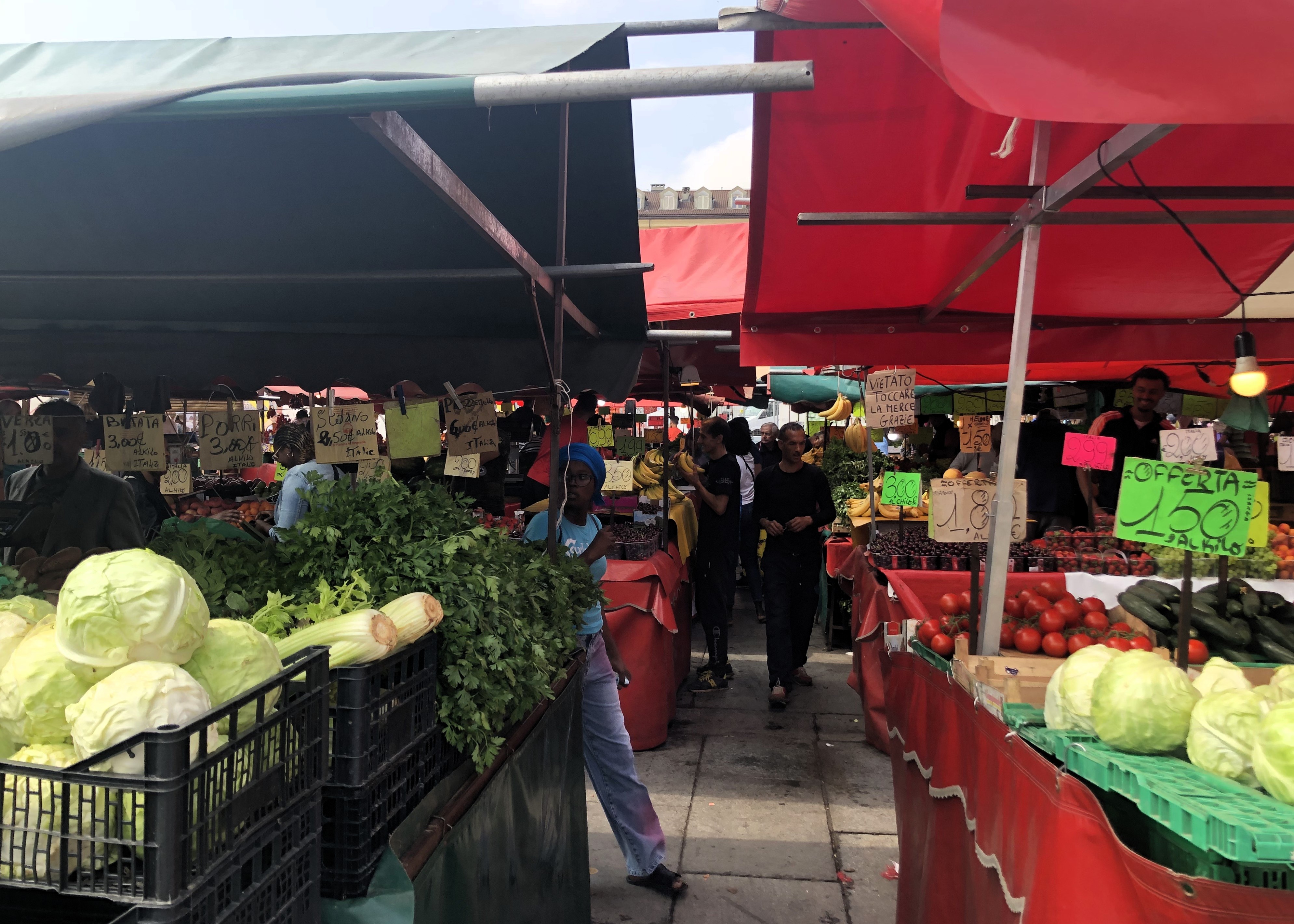
We visit the immense outdoor city market. Water-melons, tomatoes, cabbages, spinach, oranges, cherries, all in abundance as far as the eye can see. The perfume is overwhelming: lemons, limes, rosemary, sage, thyme, lavender, garlic, onions, mint. Loud voices in multiple languages. Back and forth bartering. Raucous laughter. Fingers and thumbs. At the margins of the city market, the informal market is scattered, with people selling homemade products and kefir yoghurt, despite frequent harassment by the police.
We move on to El Kheir butcher shop where Marta has already begun observational field work. A warm welcome from Yassin and Abdul. Kidneys and hearts. Tripe by the kilo. Something from the innards of an animal held up and stretched like lace. Or like a spider web. A man hands over cash, happy with his purchase. The headless carcass of a sheep hangs from the ceiling. Cows’ feet. Tongue. Lingua.
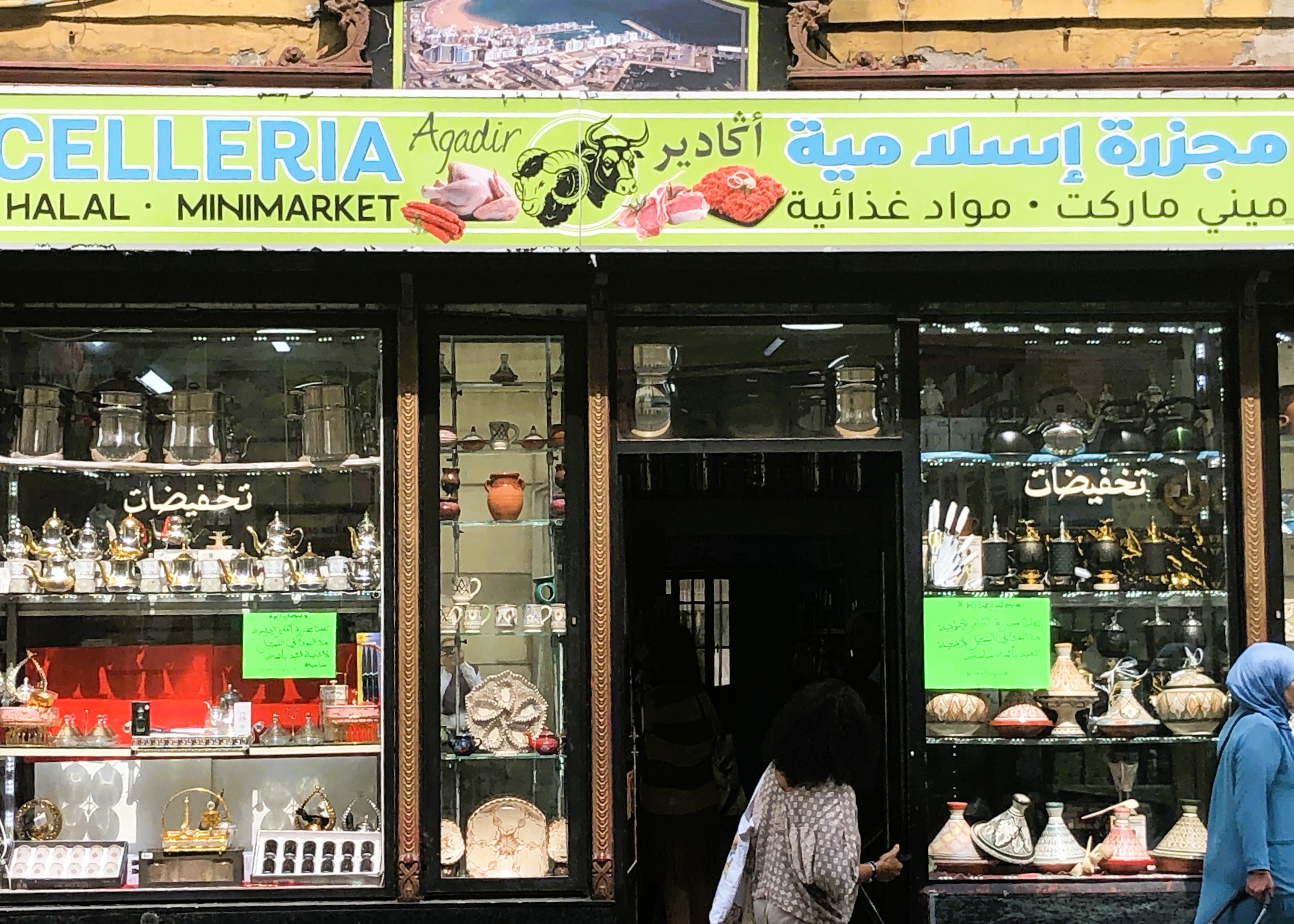
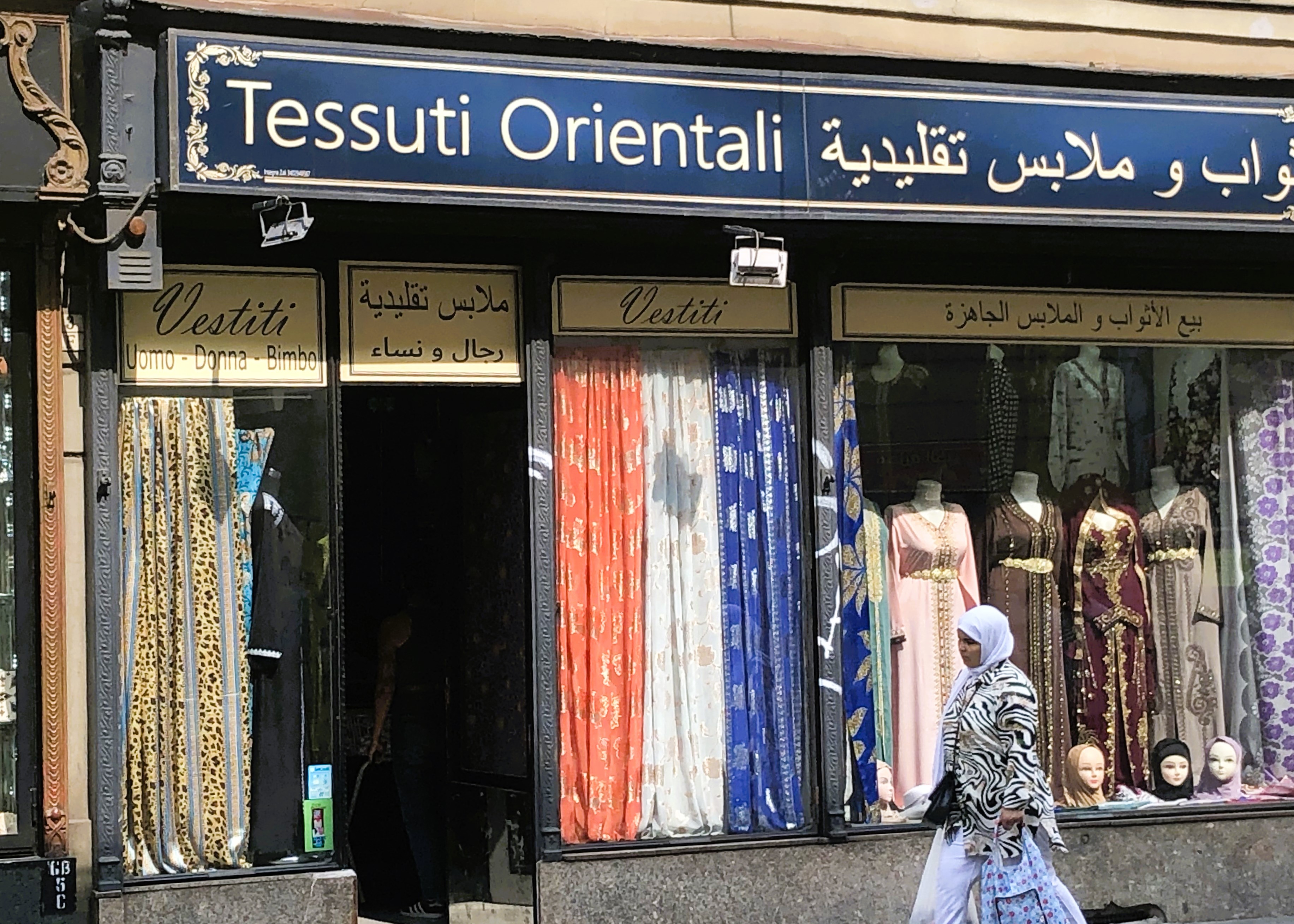
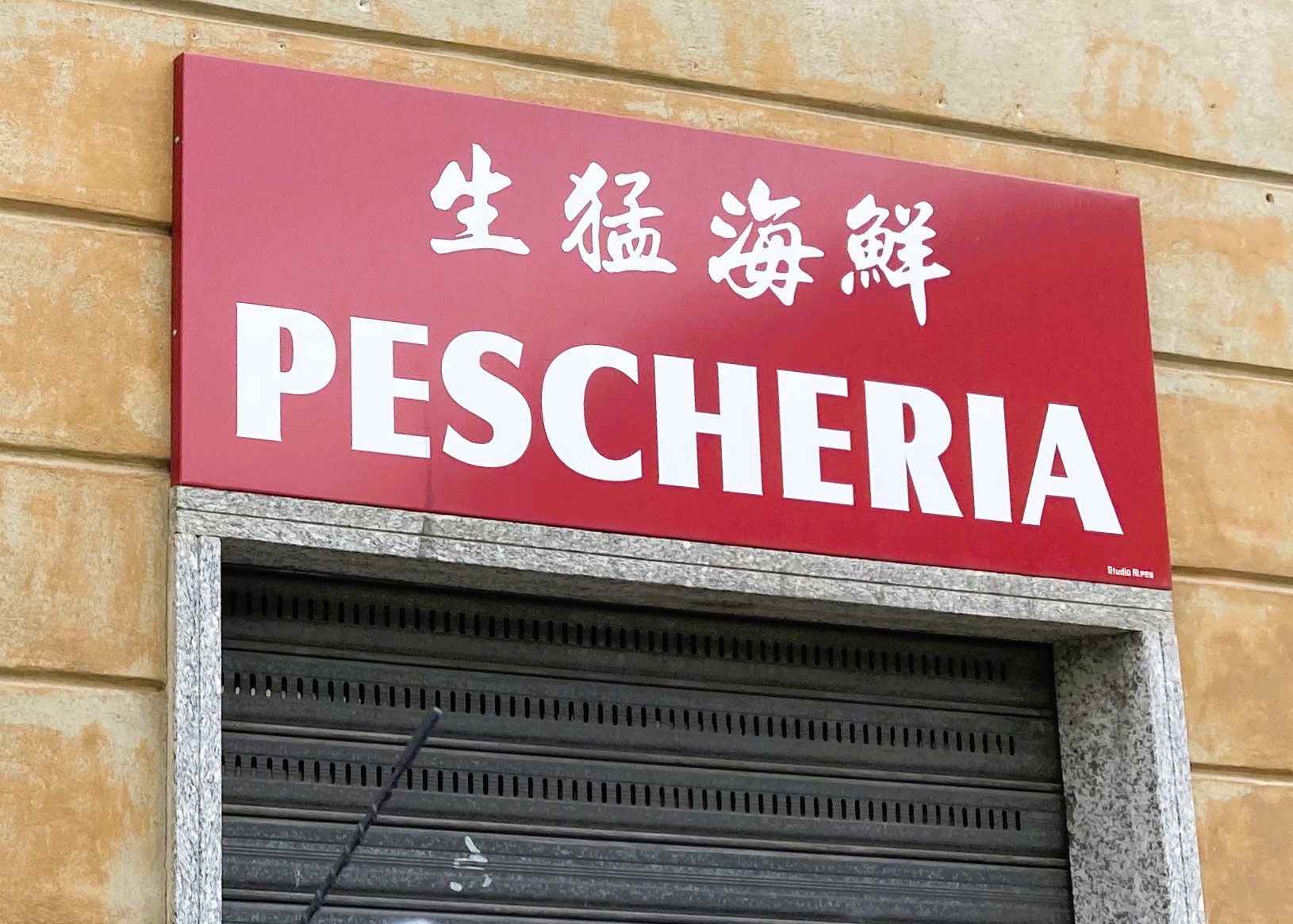
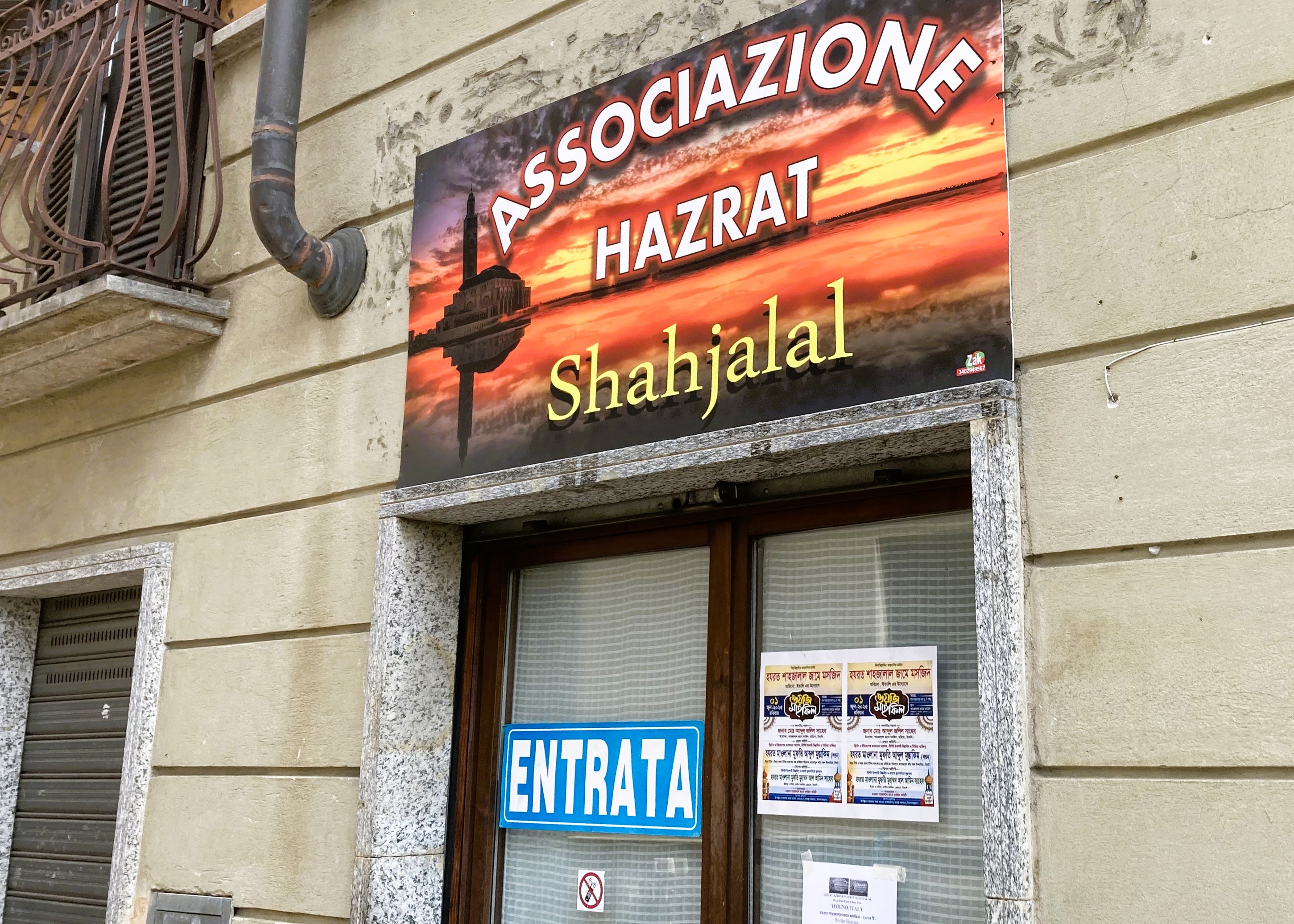
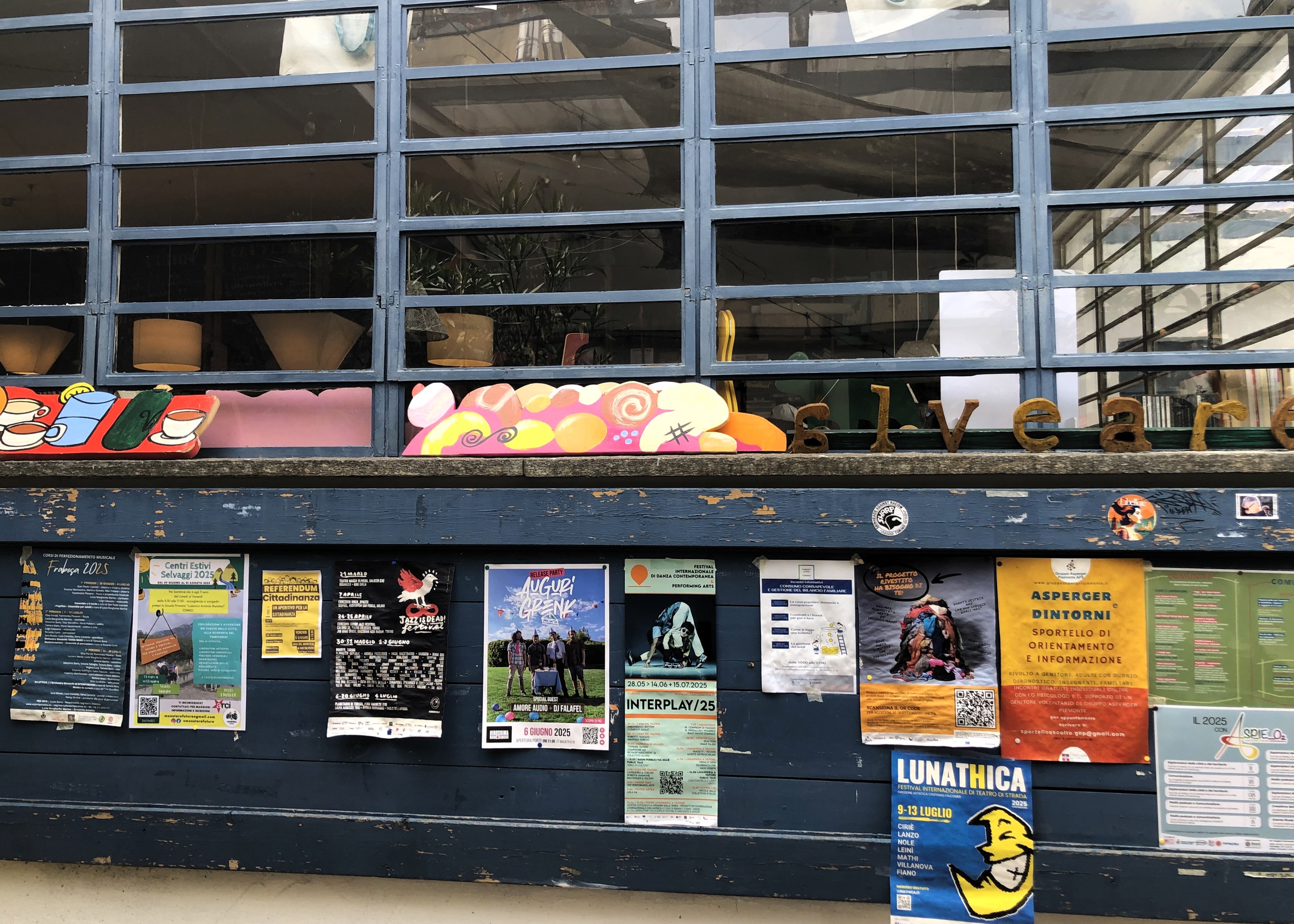
Signs: Chinese, Arabic, Bengali. Shop window saris. Chinese halal dishes. Push-chairs, headscarves, cobblestones, churches, churches, churches. Graffiti. VIVA LENIN. We bid farewell to Emanuele and wish him success with his plans for the distributed museum.
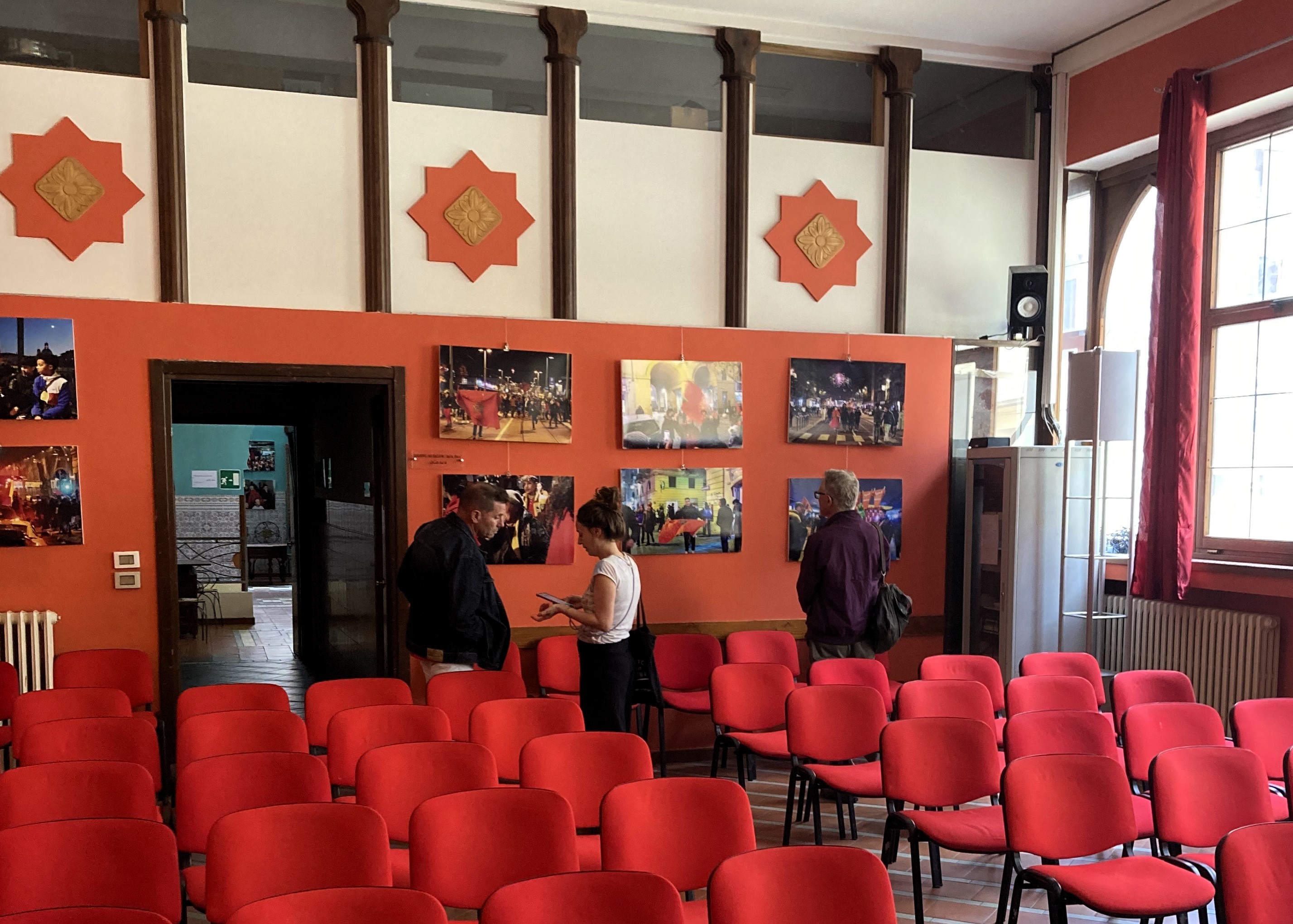
Hungry now, we head towards the Dar Al Hikma Cultural Center. The building is down-at-heel but beautiful inside, with grand staircases and ceilings. A small group of people is drinking tea at an ornate table. On the walls an exhibition of photographs taken during the football World Cup when the Moroccan national team progressed to the semi-final of the competition. The photographs show young supporters as they watch the football. The emotion is palpable. Other photographs show the ebullient joy of fans as they parade through the streets of Turin. Much in evidence are large flags of Morocco and red smoke from flares. Happy faces. Lunch is meatballs made from the produce of El Kheir butcher’s shop. Lentils and rice. Coffee. We discuss the morning’s encounters and share our thoughts.
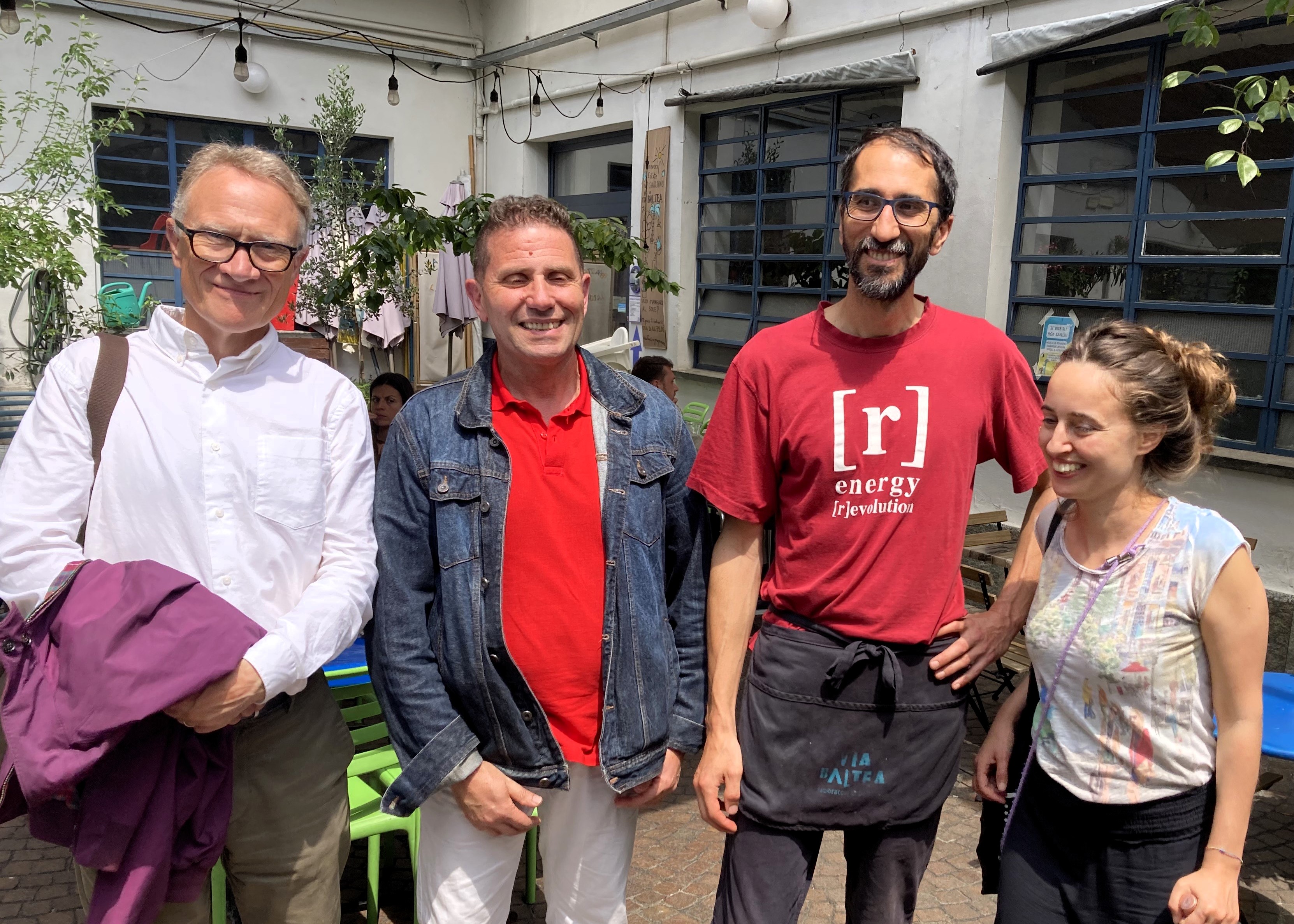
Arriving at the Via Baltea Community Hub we find two young people playing table football in the street outside. Two more are playing table-tennis. The street is closed to traffic and the metalled surface painted in bright colours. We pause to drink water, and meet with Matteo, one of the founders of the organisation. He tells us that the proposal to close the street to traffic was not accepted at first. But the community hub persisted, won approval for a trial run, and the local authorities granted permission. The pedestrianised area brings all kinds of people to the community hub and offers a large recreational space. The building was formerly a print works. The community hub now rents the premises from the printer. The community hub will provide one of the venues in a series of six monthly arts-based workshops which Marta and Gerardo will organise and run from October ’25 to March ’26 in collaboration with creative practitioners.
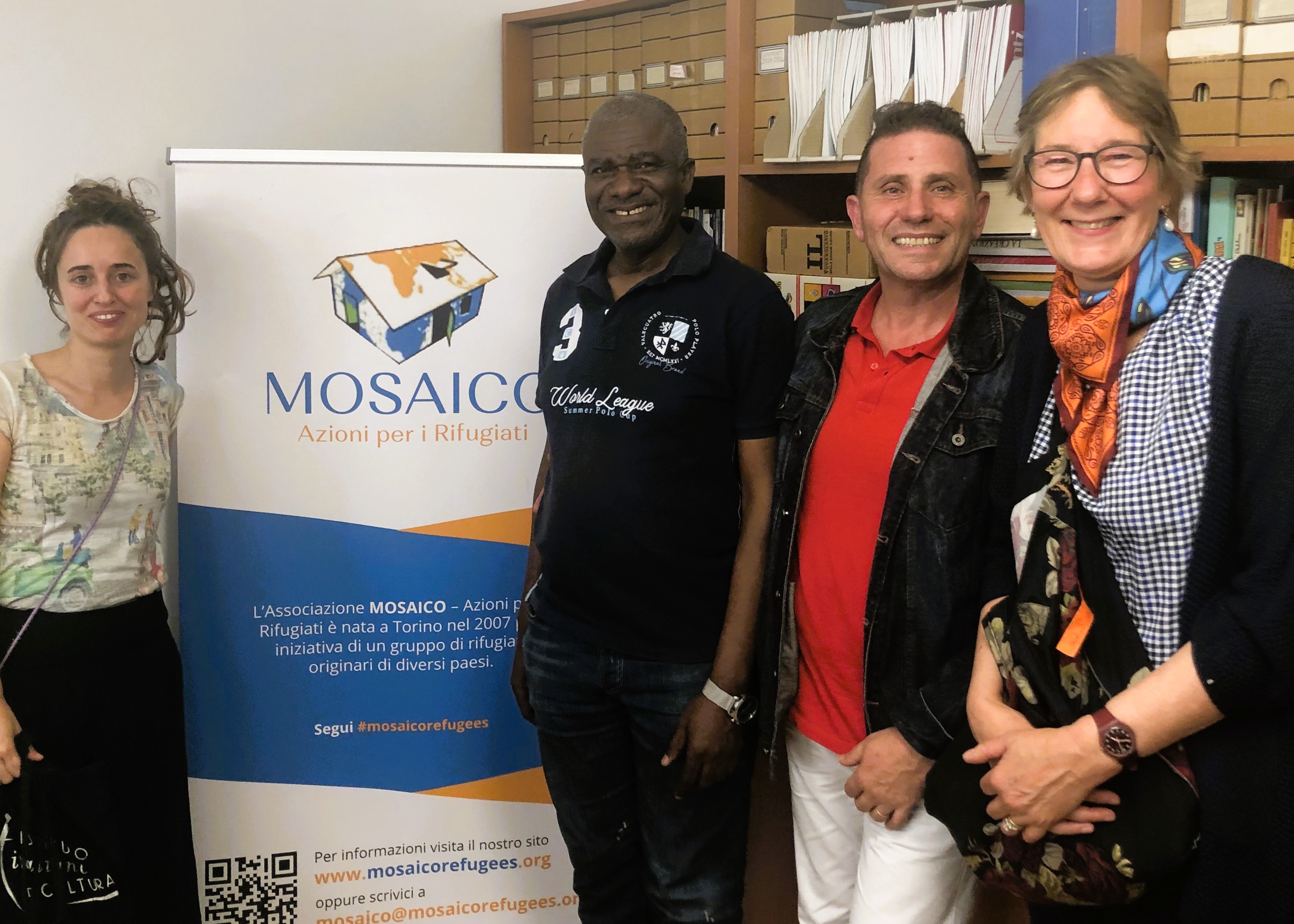
We take a bus to visit MOSAICO – Action for Refugees, an apolitical and non-partisan social promotion association founded in 2006 on the initiative of a group of refugees from different countries. We meet Berthin, who is winding up a regular meeting of project leaders. He outlines the rationale and activity of MOSAICO, which has become a significant provider of support and sustainability for refugees in Turin. Arts practice is a key element in MOSAICO’s portfolio. We are joined online by Fatima, who tells us about an Art Scholarship, ‘I Don’t Give Up My Dreams’, which involves a poetry and fiction writing competition. She argues convincingly that a key to unlocking the potential of young people, and young refugees in particular, is through finding ways to value their creative capital.
We disperse for rest, and reconvene for dinner, where research conversations continue.
Day 2
At Gerardo’s office in the University of Turin we meet BANDITE, an artivist collective founded in 2023 by Valentina Bosio and Simona Sala. The two individuals’ paths in research and creativity intersect at the crossroads of art and activism. Rooted in an anthropological approach to physical theatre, BANDITE’s work moves through the interstices of theatre, dance, visual and plastic arts, video and technology. Their practice seeks to transcend purely performative languages, blending diverse expressive codes to reclaim theatre as a collective space and a privileged lens through which to engage with contemporary realities.
To start the meeting Marta gives a presentation of the aims of the MultiLX case study in Turin, and outlines the research design and methods. Following this, Valentina talks about the artistic / activist work of BANDITE, which sets out to narrate the stories and trajectories of marginalised people. BANDITE conceives art as a space for reflection, transmission and shared storytelling. Simona and Valentina present some of their recent artivism work, Presenti Mai Assenti, a site-specific immersive soundwalk conceived as a day of resistance to the immigration control regime at the France – Italy border. The piece unfolds along the migratory route between Claviere (Italy) and Montgènevre (France). Participants walk while listening on headphones to an original sound composition blending field recordings, Mediterranean and Chiapas chants, and the poetry of Rahma Nur. Valentina and Simonae present a video of the soundwalk. Valentina also talks about ‘sensitive cartography’ as a means of mapping the journeys of people on the move.
The morning concludes with discussions over lunch about the creative workshop programme, in which Bandite will work with participants in expressive co-creation focusing on body, language, relationships and memory. The work will engage with the theme of mobility, engaging with physical, social, cultural and linguistic borders. The creative process will culminate in the creation of a living archive composed of sounds, images, gestures and words.
Bandite’s final performative outcome will be conceived as a public restitution event, where art, research and local communities meet to promote social inclusion, intercultural dialogue and strengthening of the linguistic capital of the young people involved.
Lunch over, farewells made, there is a genuine sense of progress and excitement about the Turin case study.
 MultiLX
Leave a comment