Maite Puigdevall Serralvo | Joan Pujolar Cos | Victor Corona | Angela Creese | Adrian Blackledge
48 hours before
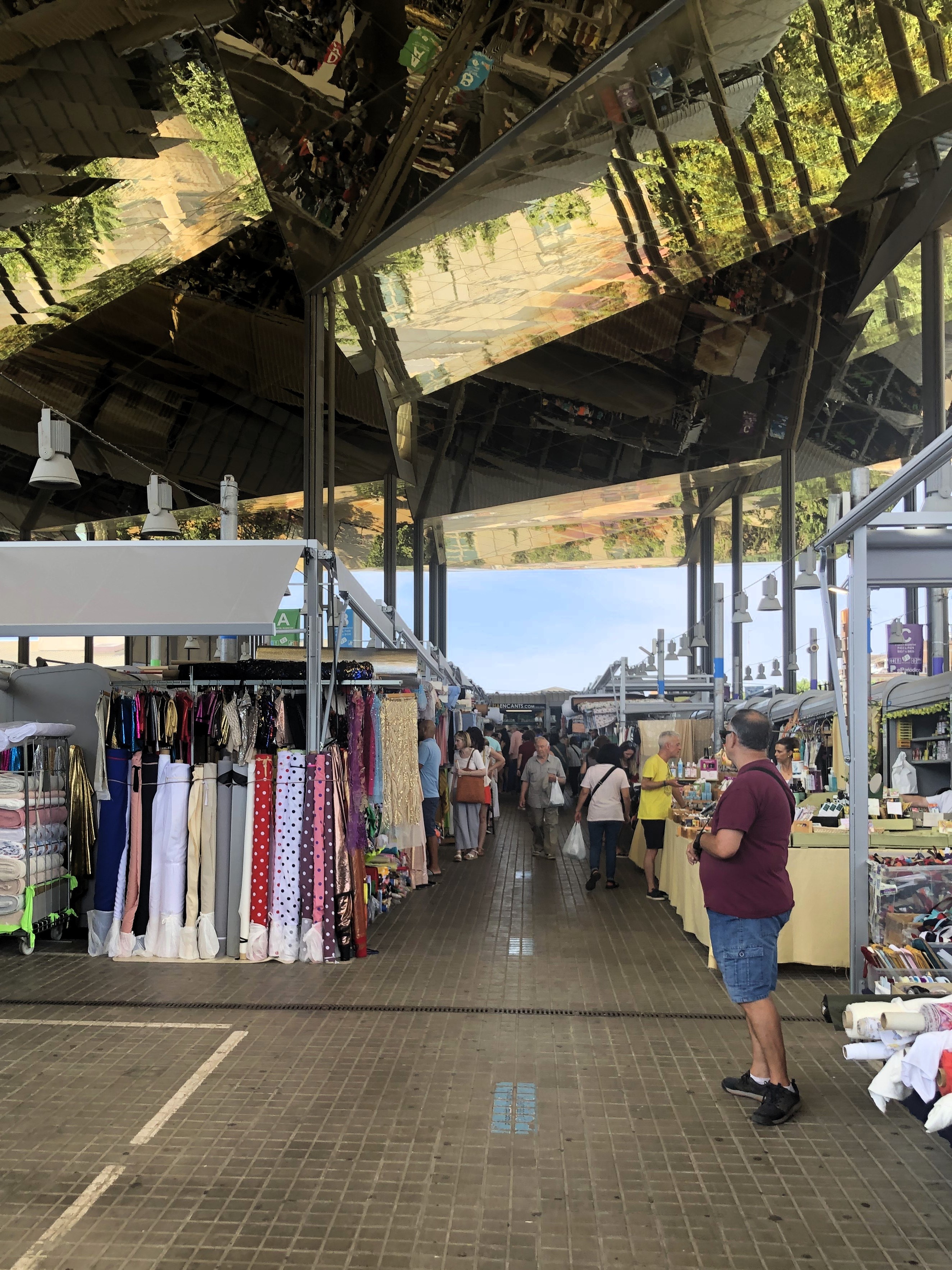
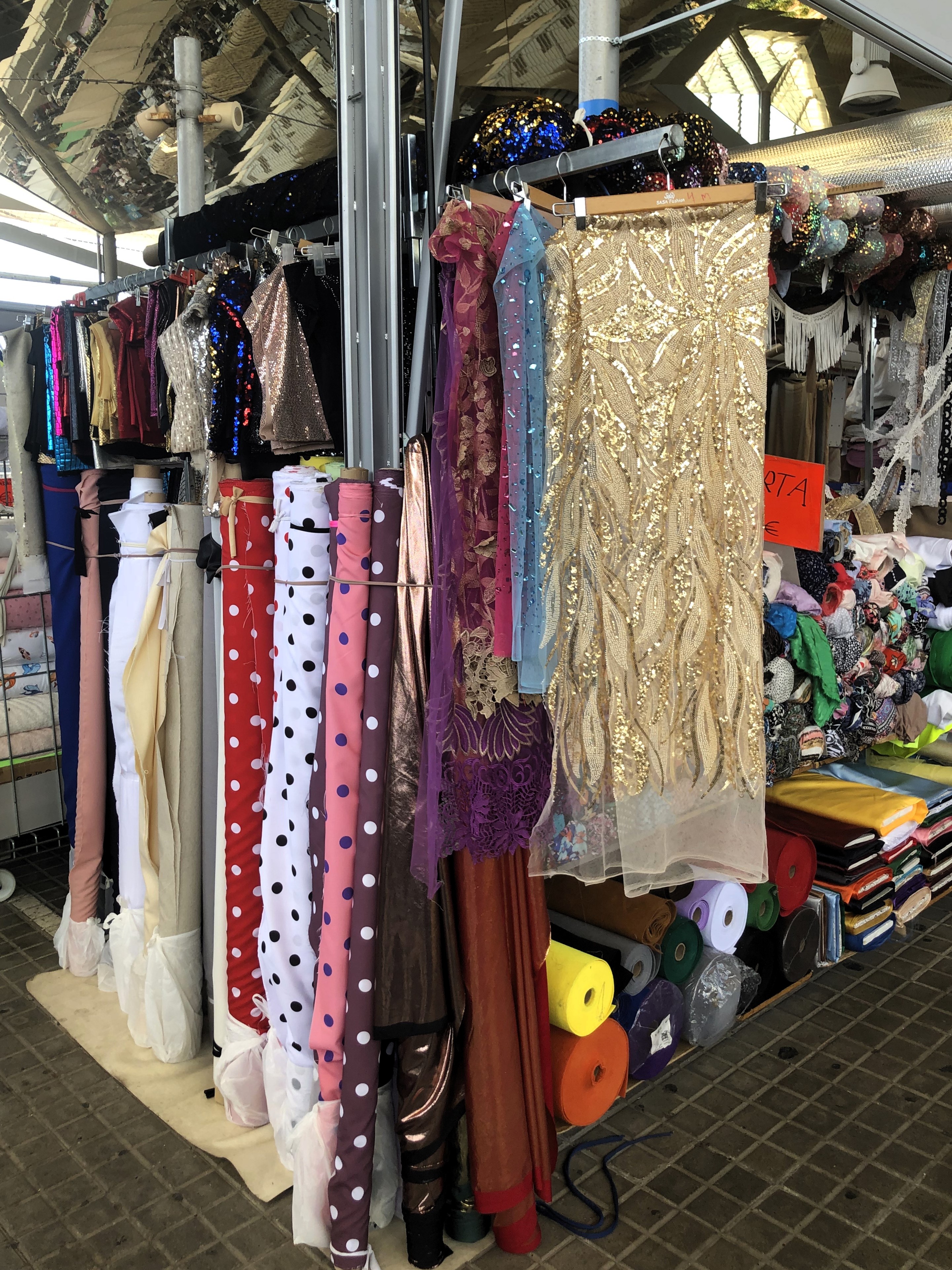
Before the research team meets, Barcelona is already asking questions. Like Porta Palazzo Market in Turin, the huge Encants Market opens out before us. Here hundreds of stalls display their wares: vintage shirts and skirts, paintings, antique jewellery, second-hand shoes, football jerseys, ornaments, lamps, clocks, watches, telephones, megaphones, bicycles, perfumes, cosmetics, postcards, photographs, screwdrivers, door handles, candles, teapots, coffee pots, skillets, cast-iron saucepans, superglue. Anything and everything. Histories of people on the move. Connections between remote places and large European cities.
A short walk away is Disseny Hub, Barcelona’s design museum whose permanent and temporary exhibitions engage the viewer in visual communication. Posters created for the Barcelona1992 Olympic Games provide inspiration as we look forward to two days of discussions about language, sport and the arts.
Day 1
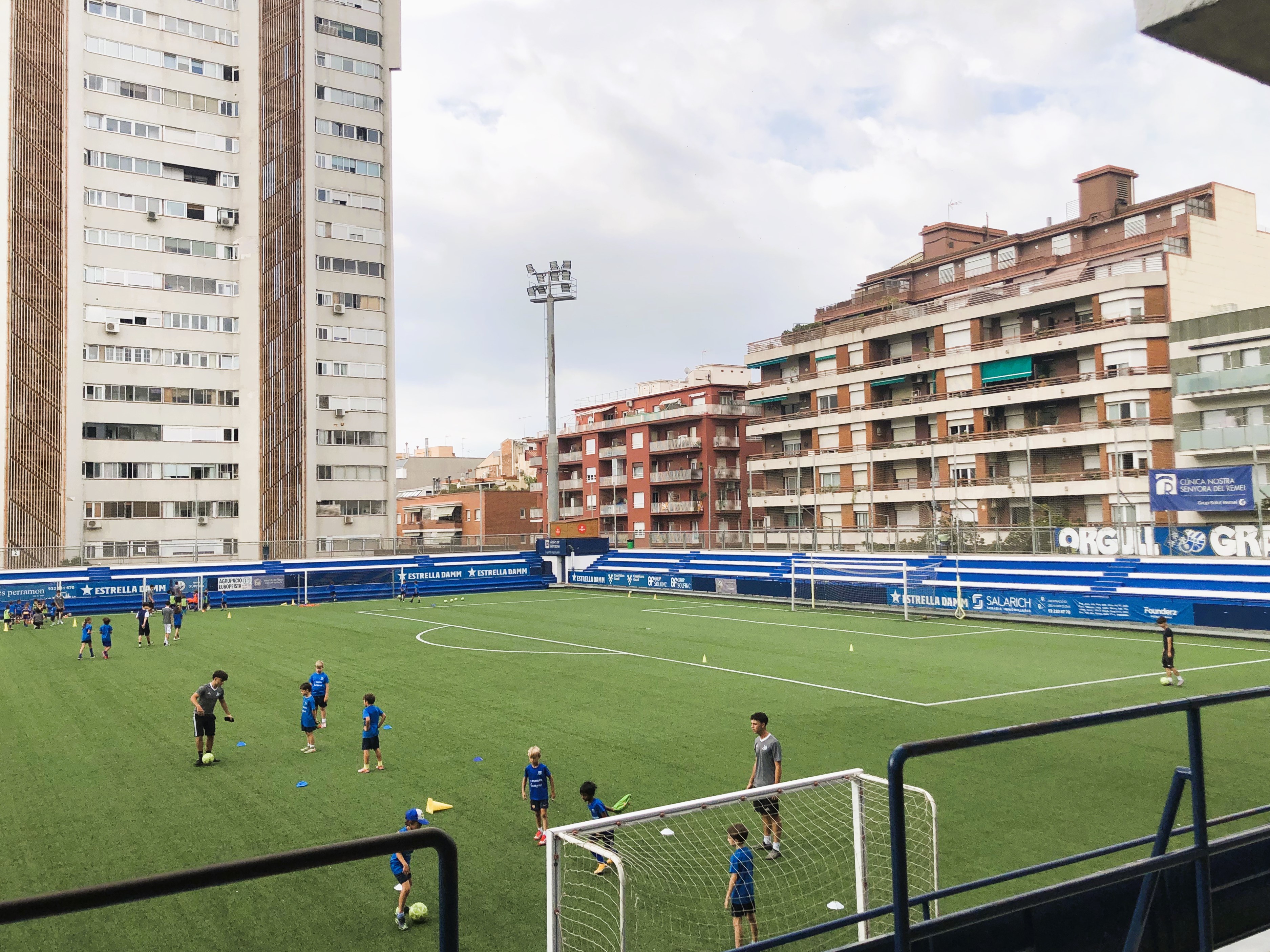
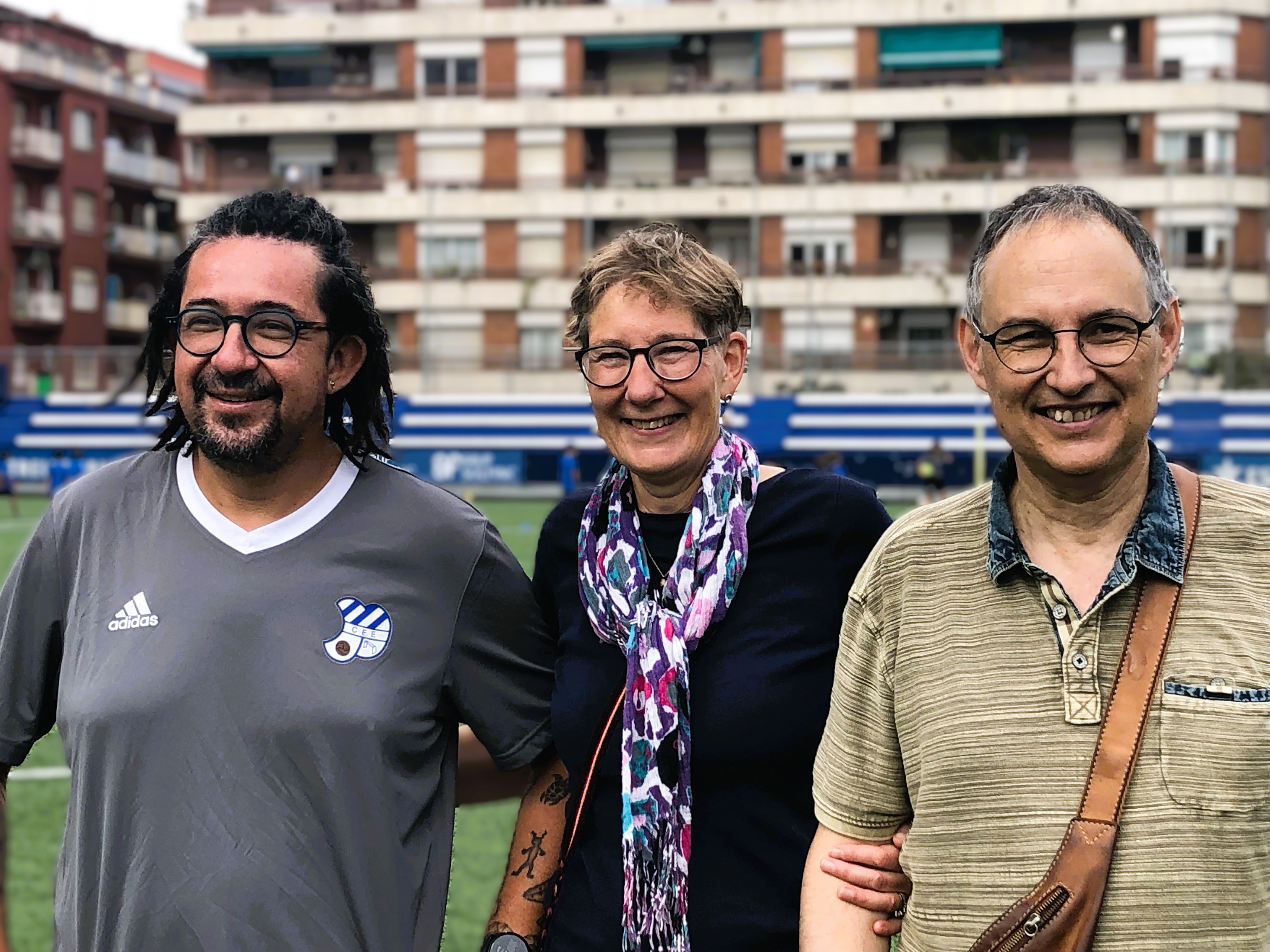
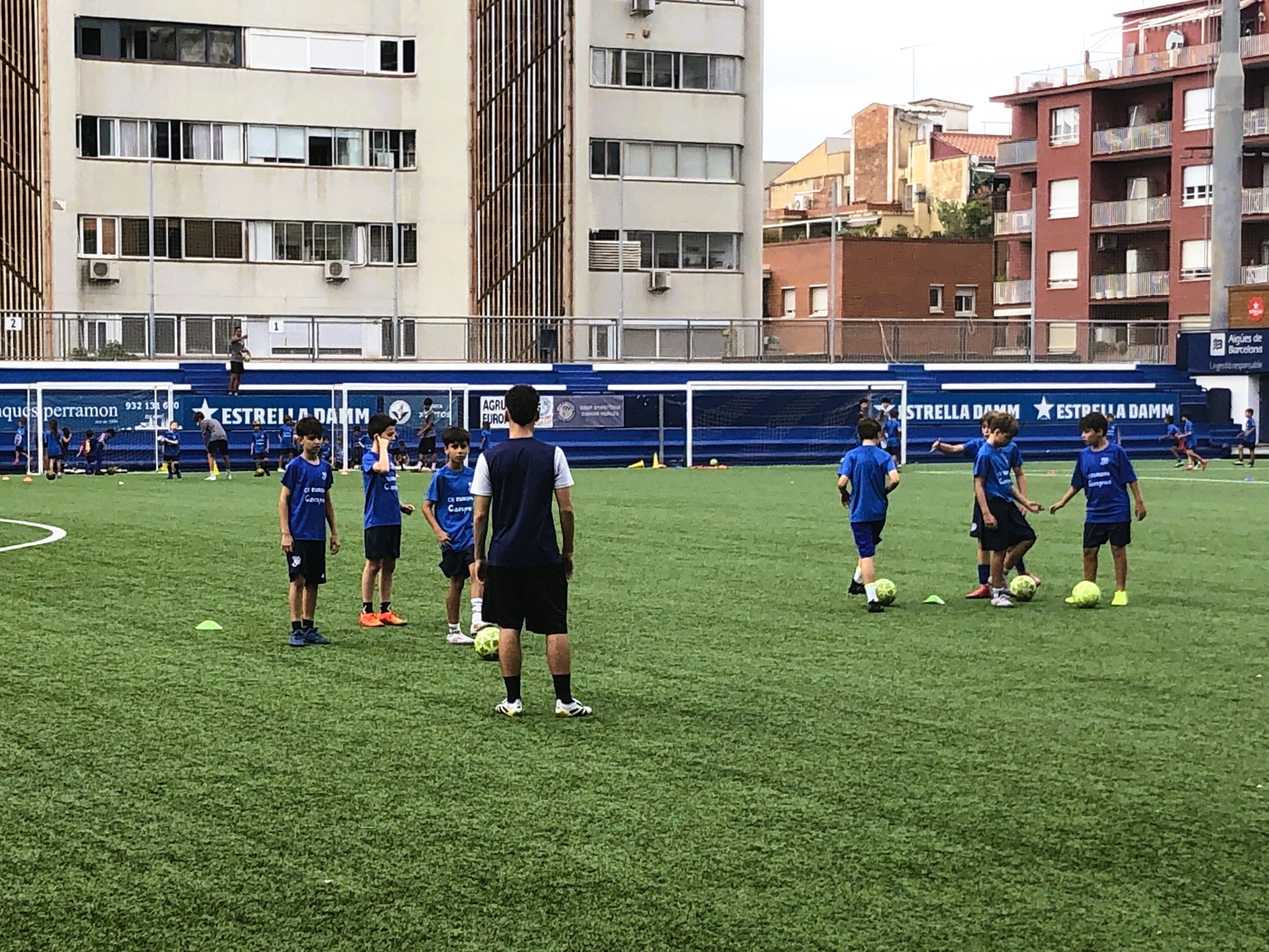
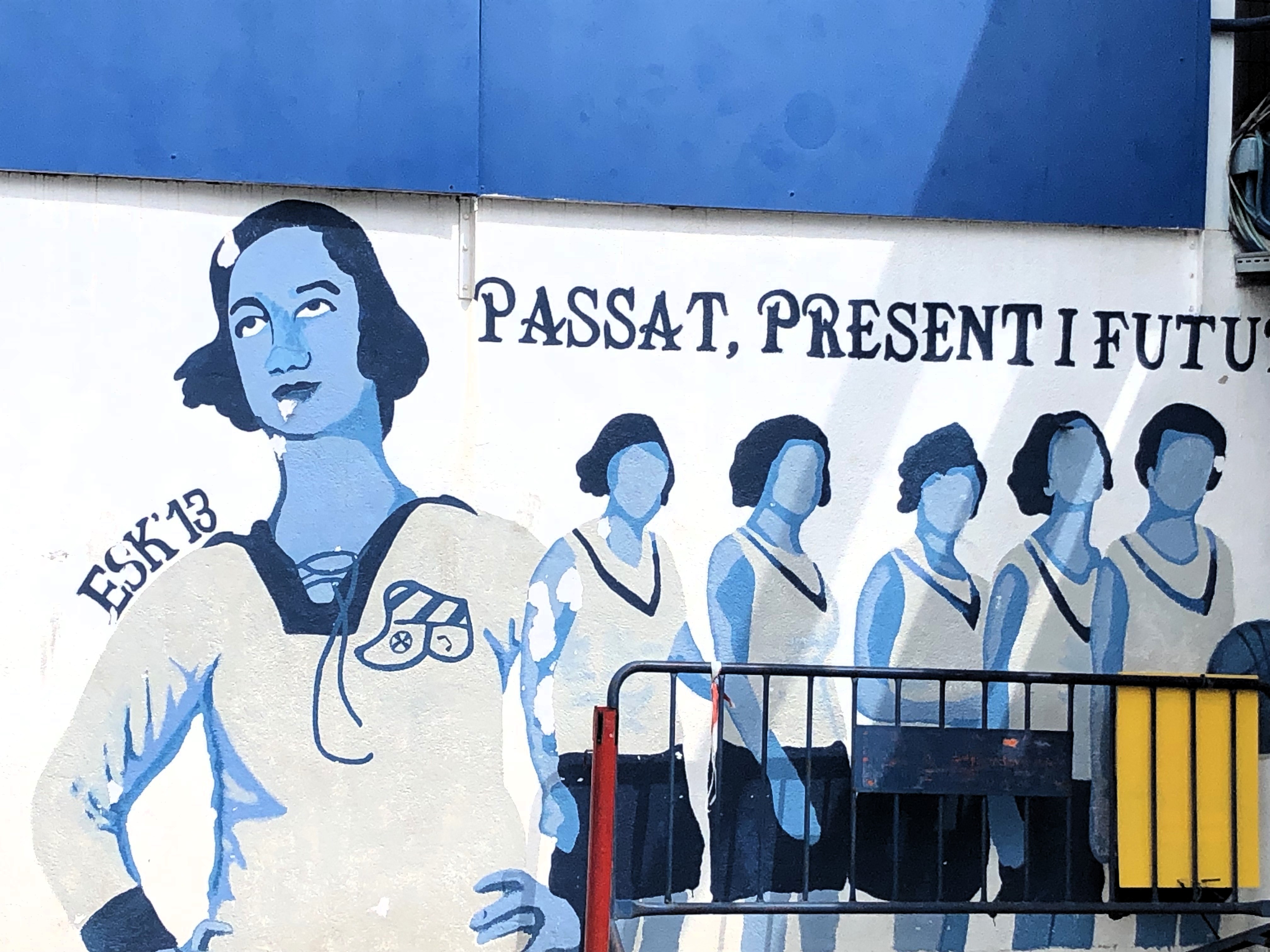
Maite Puigdevall, Joan Pujolar, Angela Creese and Adrian Blackledge meet on Gran Via de les Corts Catalanes. First on our agenda is to meet up with Victor Corona, who is engaged in participant observation of a football summer camp at Europa Football Club, Gràcia. Victor comes down to the entrance and lets us in. He introduces us to some of the coaches and administrators. The stadium is impressive: an oasis of green (albeit artificial grass) in the high-rise residential sprawl of Gràcia. The buildings create a bowl surrounding the playing area, so that the arena feels much bigger than its actual capacity. Hundreds of children, mainly boys, are engaged in practice drills: passing, shooting, tackling, running into space, diving to save. Victor is well known to the coaches and players now. The youngest children look to be four or five years of age. Each group is organised by a coach, some of them quite young themselves. The players all wear identical blue training strips, the coaches wear grey. Everything is highly structured and organised. After a while there is a break. Everyone finds a spot to sit and refuel. We chat to the coaches about the club, and what it offers to the young people. There is a sense of history, heritage and belonging. The football club means something in this community.
Leaving the Europa club for the university at Rambla del Poblenou we stop for coffee to discuss what we have seen. We talk about the practicalities of observation while participating in sporting activity, how to be simultaneously researcher and assistant coach. Victor is skilled in this aspect of research. Once we reach the university the case study team gives a more extended update on fieldwork. We head for lunch on Carrer Llacuna, continuing our conversations. Once returned to the university we focus on the potential value of arts-based research in the Barcelona case study. There are discussions about rap music, contemporary dance, and film. Following the meeting we set off for a visit to ‘unknown Barcelona’ in the neighbourhood of Nou Barris. However, after a brief glimpse of volleyball players on the urban beach the skies open and a storm drives us under cover. The neighbourhood will wait for another time.
Day 2
We meet on Carrer Diputació, outside the building which is home to Òmnium Cultural, an organisation which works for the promotion of Catalan language and culture, and the defence of civil and human rights. Òmnium Cultural was launched in 1961to combat the censorship and persecution of Catalan culture. It now has 190,000 members. Òmnium’s goals include the support of social cohesion at local, European and global levels. Òmnium Cultural is a committed partner to the MultiLX project. Its many initiatives include promotion of the Catalan language through the performing arts, sports and popular culture. Two members of staff at Òmnium Cultural, Aina Trafach and Iker de Luz, give a presentation about their work. This precipitates positive discussion about the role of the organisation in the MultiLX research project. We thank Aina and Iker, and after a brief tour of the Òmnium Cultural offices we take our leave.
We pause for a coffee break, then head to La Rambla, and the Centre d’Arts Santa Mònica. Here we visit Citissimum Altissimum Fortissimum, an exhibition about sport in contemporary society. The exhibition questions the role of money in sport, the dogma of success at all costs, the nature of competition and the unattainable ideal of constant improvement. The exhibition brings together artistic pieces that deploy absurdity, irony and deconstruction to question ideologies of sport as spectacle. It leaves us with much to think about as we move forward with our investigation of language, sport and cultural heritage in Barcelona. Too quickly our time is up, and we disperse, still with our heads full of ideas.
 MultiLX
Leave a comment