Mark Ryan | Various Contributors[1]
The MultiLX Research Collective Becomes a Team
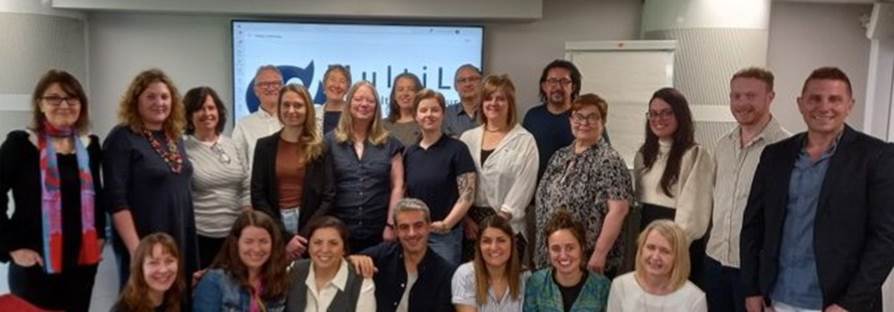
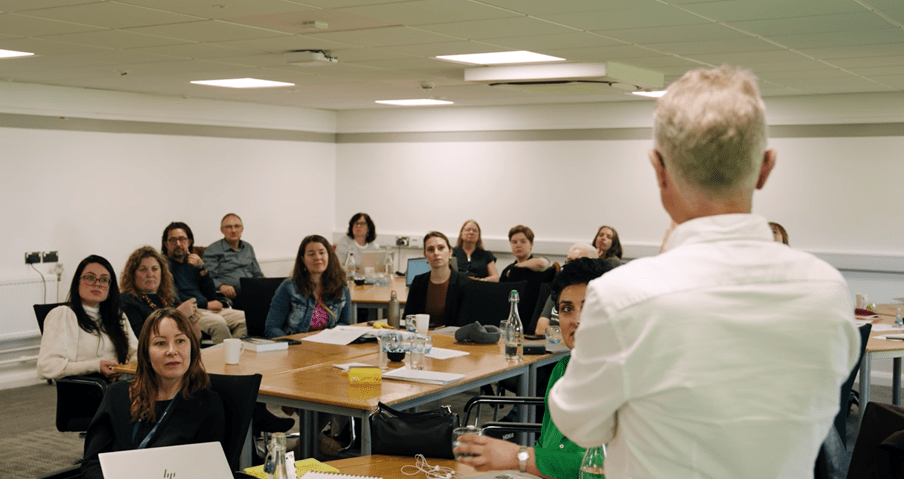
In late April 2025, researchers from across Europe all gathered in-person for the first time at the University of Warwick to begin an ambitious journey together. While some of us had met before – in conferences, on Zoom calls, or on other shared projects – this was our first time in the same physical space. As a research collective working on the MultiLX project, our mission is to understand how young people navigate language in an increasingly digital, diverse, and multilingual Europe. On this day, our mission was to be open, vulnerable, and truly become a team. Before we can connect with other communities and bring our research to effect change, we had to begin with ourselves: to connect, reflect, and form a community.
Anticipation and Anxiety…and Amusement?!
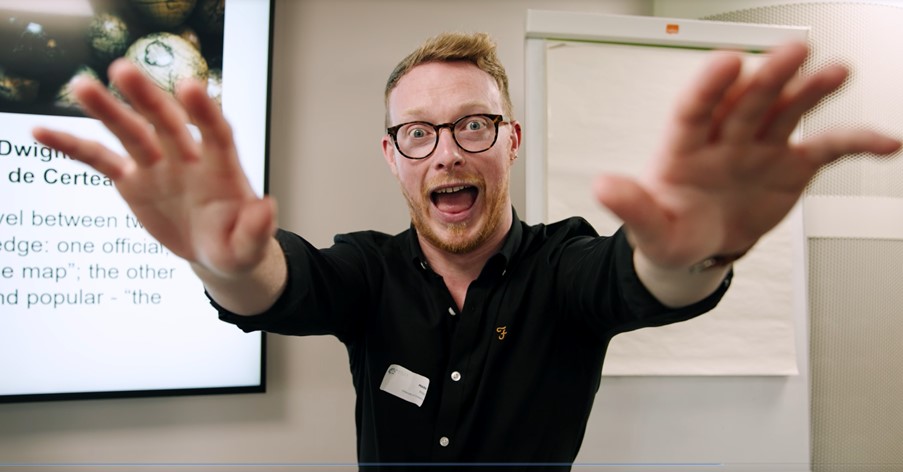
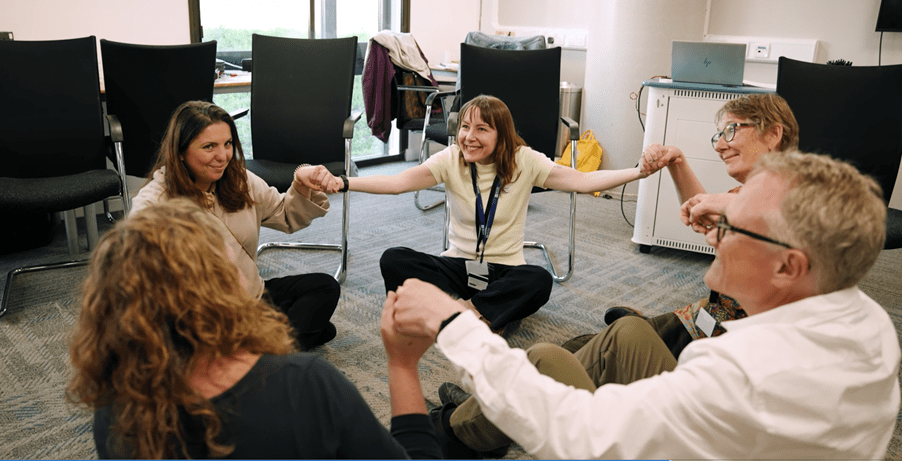
For many of us, accustomed to the role of observer, stepping into the centre – literally and metaphorically – was unfamiliar and even uncomfortable. One team member poetically and poignantly captured this sentiment: “A daunting space. Another galaxy. Gaaaping at me with its wide jaws… Will I be eaten up whole? Will I disappear into the void?” This sense of trepidation was certainly palpable during our drama workshop – one of the most revealing experiences of the trip in which we learned to express our identities, as both researchers (and crucially, as people). This manifested not only through words alone, but also through movement and gesture, alone and in relation to each other. Standing in a circle, being seen, felt risky and induced vulnerability. Yet, it was precisely by stepping into this vulnerability that connections began to form.
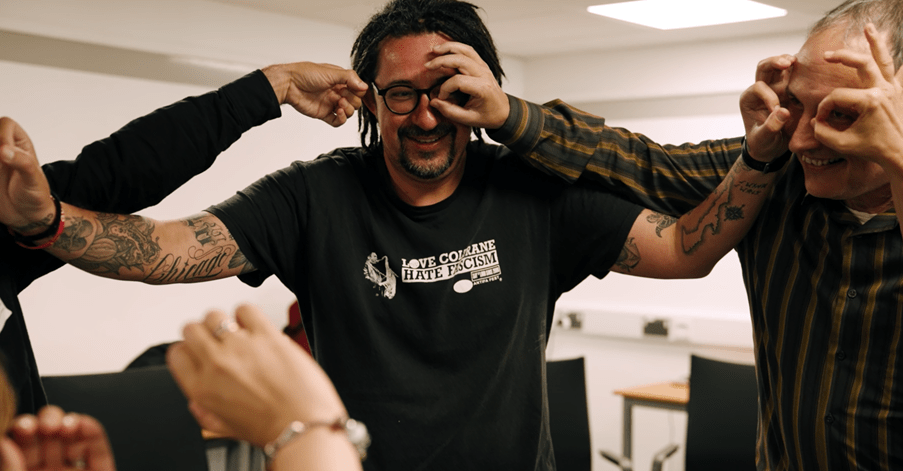
As one team member wrote: “Maybe I am not falling… A hand reaching for mine. Eyes meeting. A smile.” Through shared laughter, uncertainty, and courage, we began to dismantle the invisible walls between us.
Building Relationships Across Borders and Disciplines
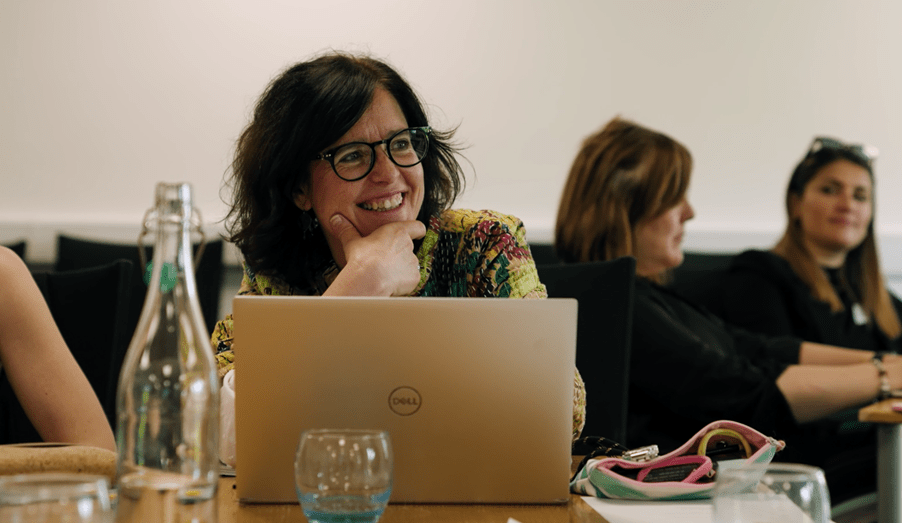
What stood out immediately was a profound sense of openness within the group. Despite our different backgrounds, languages, and levels of academic seniority, the Warwick meeting created a space where hierarchy began to dissolve, and collaboration began. Whether it was over a cup of coffee on our well-earned break after the drama workshop, or within the sessions themselves, tension and nerves dissolved.
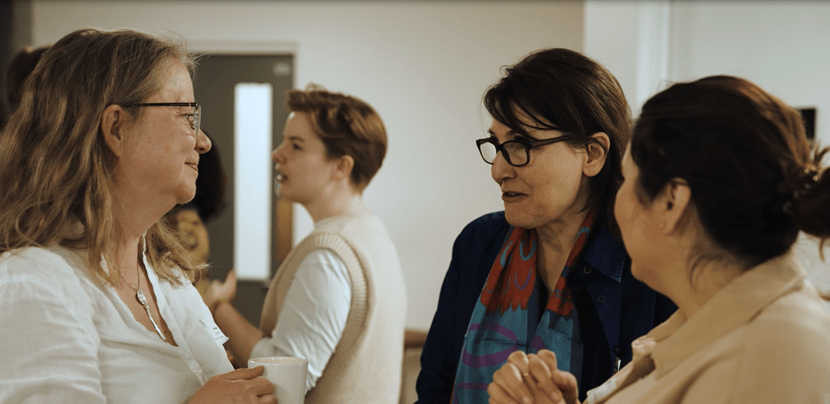
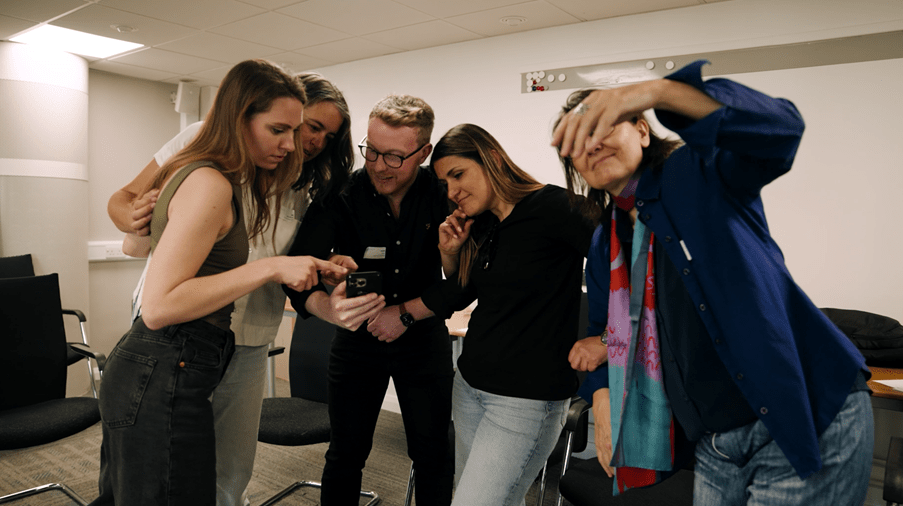
As one team member remarked: “I felt optimistic about humans. We can be playful, we can be curious, we can be good to each other.” Trust and collegiality, often elusive in academic settings as some team members remarked, became foundational. One colleague referred to the environment as “fault-tolerant” – a space where it was not only safe to get tangled up, but where such moments became vital opportunities for learning and forming bonds. Even simple moments – a short walk with someone new, a shared meal – contributed to an atmosphere of warmth, mutual respect, and honestly, fun.
“This was the first time we all came together in-person and the screen no longer separated us from the people behind the research.”
Learning by Doing: A New Kind of Training
Unlike traditional academic workshops, this meeting embraced embodied, artistic, and collaborative methods. The drama workshop, for instance, encouraged us to explore communication beyond language—through gesture, rhythm, and proximity.
We reflected not only on how we conduct research, but on who we are when we do it. One team member reflected: “I realised one more time that research and methodology also touch on the role of the researcher… as a teacher, and as a person with a migration background.” For many, it appears the experience offered a profound shift – from viewing participants as passive sources of data to seeing them as active co-creators of knowledge.
“The idea that participants are not just sources of data, but active agents in shaping the research process felt both ethically right and methodologically exciting.”
It was also a reminder that knowledge is not only transmitted – it is felt, performed, and shared.
Engaging with Communities: Research That Matters
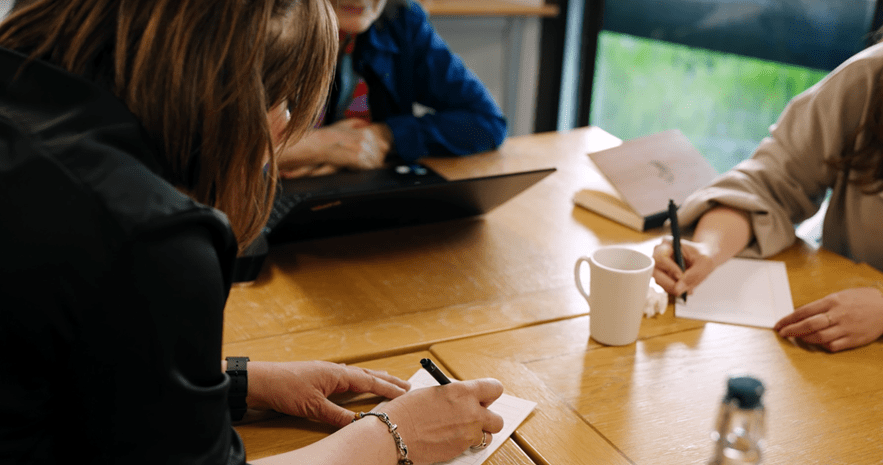
MultiLX isn’t just a project about languages; it’s about people – especially young people – whose innovative voices are often overlooked in policy decisions. Several participants were deeply moved by materials presented at the meeting, which included a documentary about the Kven language in Norway and talks on community-based research. The effect of this sharing was that it re-centred communities and people. This was articulated by one team member: “We will engage with young people who desperately need a stage to convey their experiences, their struggles, and their worries for the future. Our responsibility is not only with our funders, but with them too.”
We also discussed co-production, which represents a departure from merely “studying” communities, and instead foregrounds collaboration. Still, there were important reminders to be cautious of over-romanticising community engagement: “In some cases… there is a risk of over-romanticism, while certain contradictions can be smoothed over or even erased. This tension between embracing complexity and telling a clear, compelling story is something I’d like to explore further.”
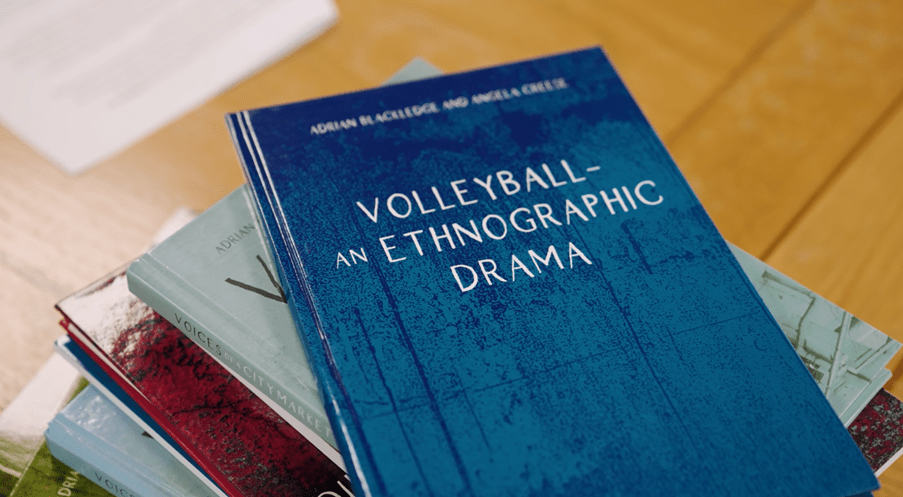
Our collective hope seemed to be to embrace this complexity honestly and reflect on it in our outputs – be it in reports, creative artefacts, or policy recommendations.
Towards a Collective Voice
Perhaps the most meaningful transformation over the two days was not methodological or logistical, but relational. We became a team – not just in function, but in spirit. One researcher summed it up: “After Warwick, I feel much more equipped. Not because I suddenly know everything, but because I know we don’t have to do it alone.”
Together, we found joy in uncertainty, value in vulnerability, and power in plurality. Our voices, once tentative and scattered, began to harmonise – not into one voice, but into a polyphonic chorus. A chorus that will continue to grow as we enter the field, engage with young people, and co-create knowledge that speaks to the diversity of Europe’s linguistic landscape. In a world that often feels fragmented, we are reminded that language is not just what divides us – it is what connects us.
[1] This blog post was based on reflections gathered from the team after this Training Meeting: MultiLX 2025a. MultiLX Training Meeting 1. University of Warwick, U.K, available here.
 MultiLX
Leave a comment