Paula Teixeira Molans | Bernie O’Rourke | Jai Mackenzie | Adrian Blackledge
Day One
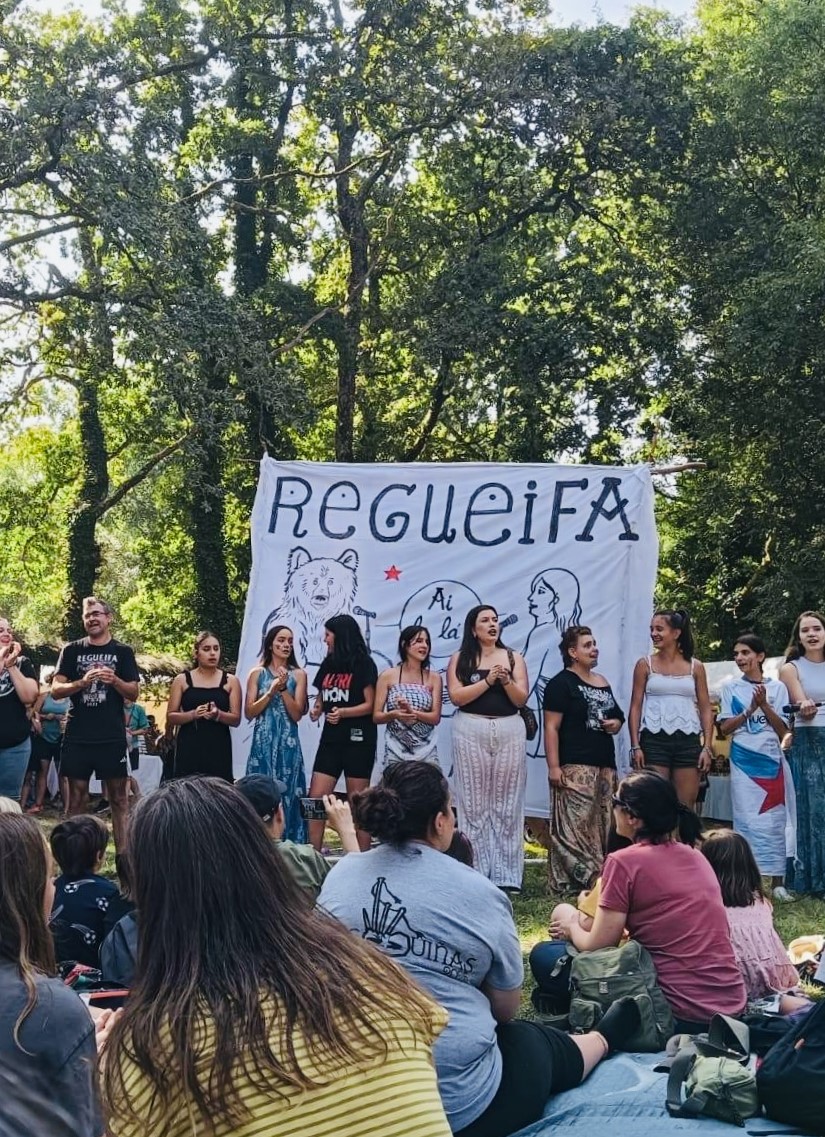
We met in the morning and discussed the progress and plans of the Santiago de Compostela case study. Paula talked about a very busy Summer of data collection, amongst other things following a regueifa band to festivals and performances. Bernie discussed recent analysis of data which Paula had been collecting, with a particular focus on language revitalisation in the Santiago de Compostela project.
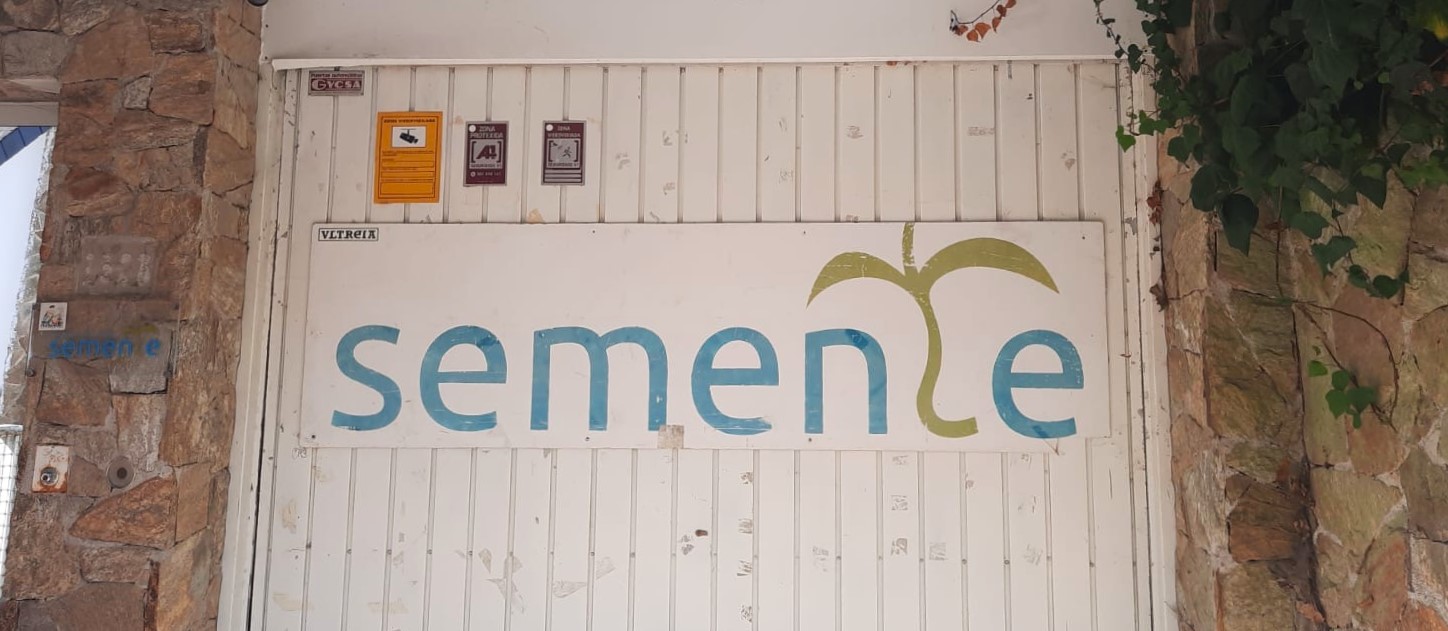
In the afternoon we took a taxi out of town to visit Semente School. This first school was founded in 2011 by parents who were not satisfied with the mainstream school sector as a space for their children to develop as Galician speakers. The Semente movement, which has now five schools across Galicia, grew from grassroots social justice initiatives. The school was lively and busy this afternoon, children and teachers fully engaged in educational work and outdoor activity. There was a relaxed, easy-going atmosphere as we were given a tour by the school co-ordinator.
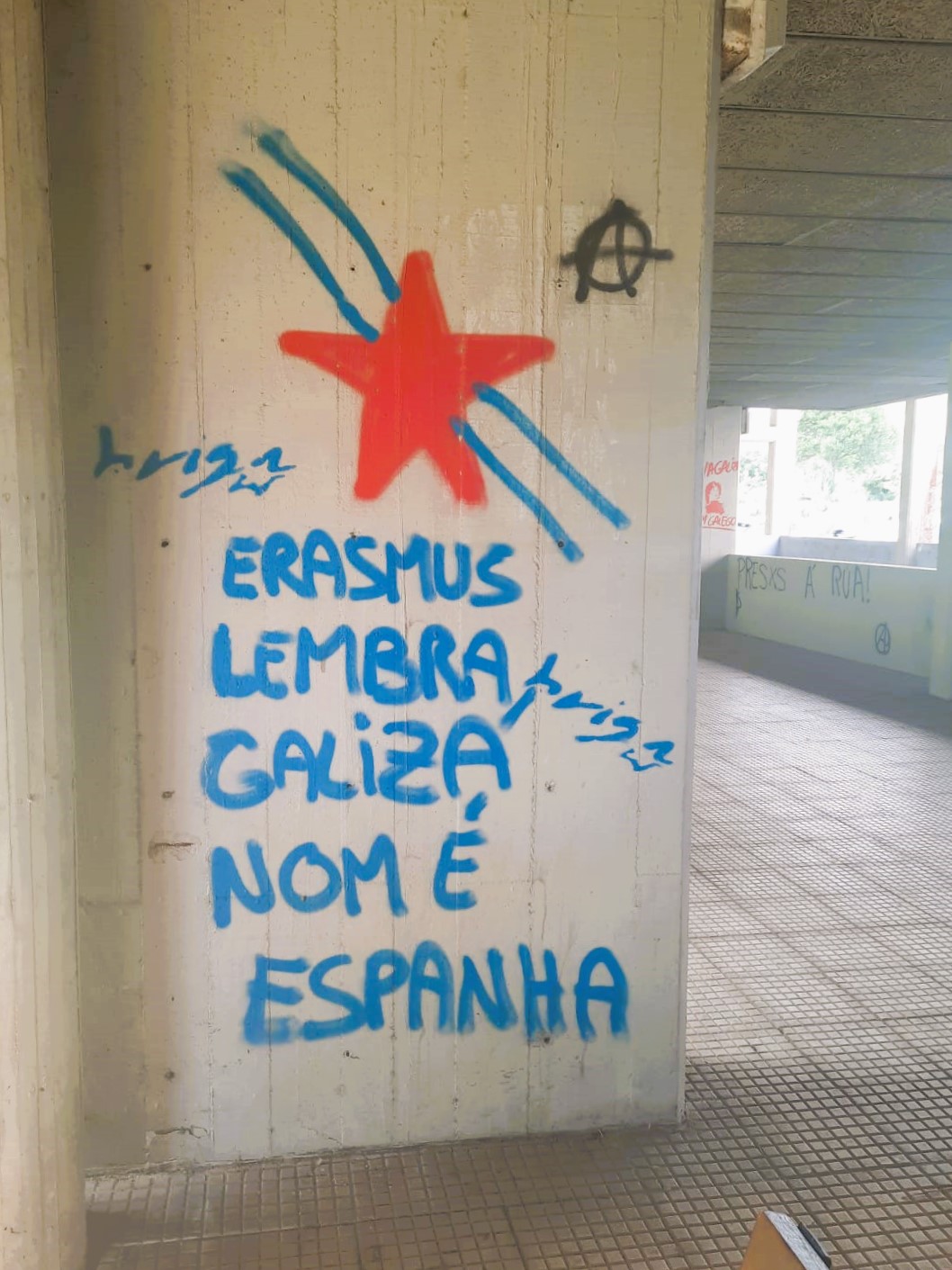
Bidding farewell to the teachers and children who had so generously given us their time, we returned to the city. We travelled to our next destination via the Universidade de Santiago de Compostela’s School of Philology, home to an exhibition of sorts – a collection of graffiti messages such as Galiza nom e Espanha (Galicia is not Spain).
Our next stop was to meet with Mirari Urruzola, a puppet artist. Mirari talked in detail about her creative practice, and presented examples of her work, both in paper form and as YouTube videos on her iPad. It was uplifting to see puppet-theatre alive and well and engaging a range of audiences as a medium for storytelling.
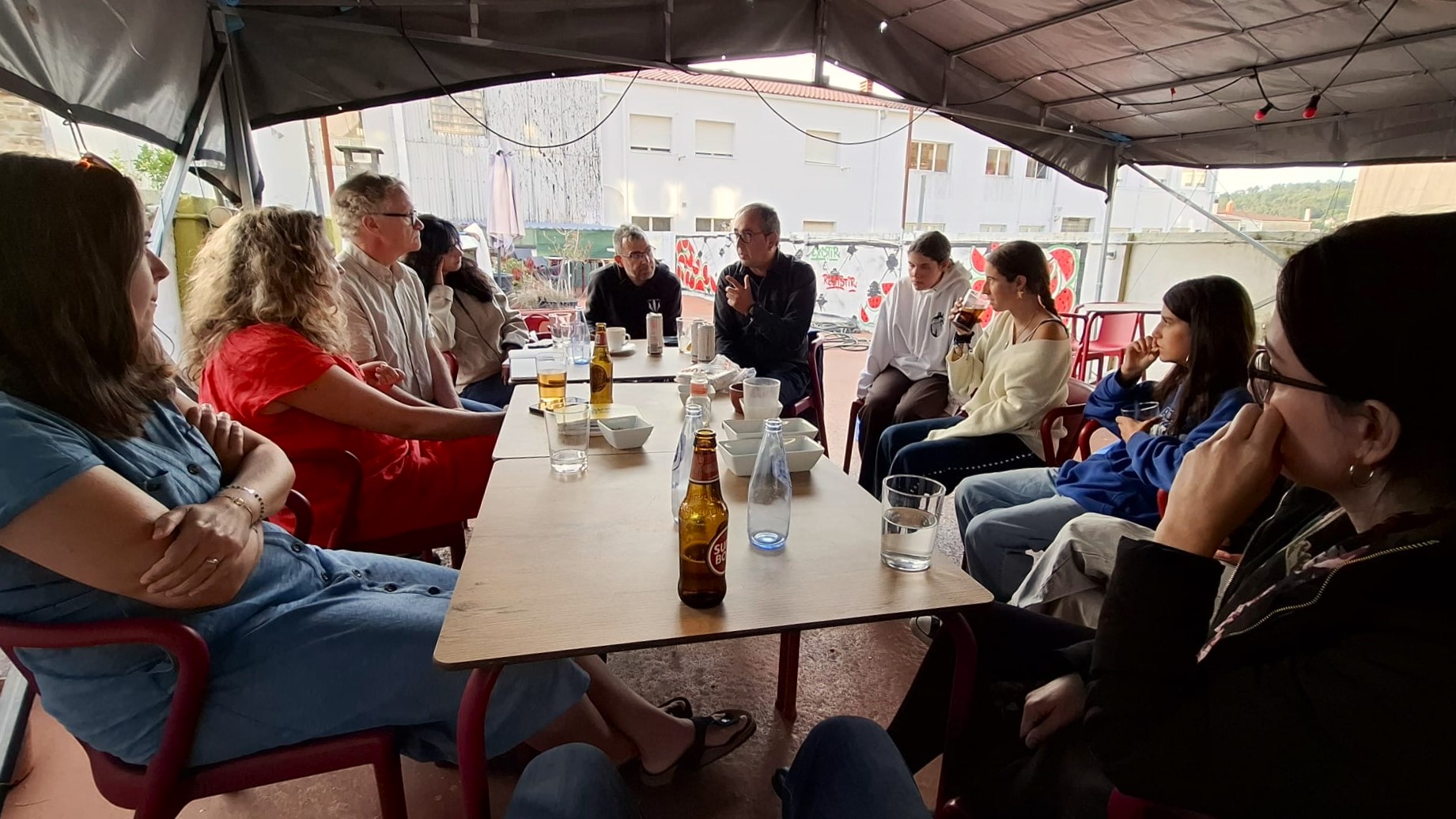
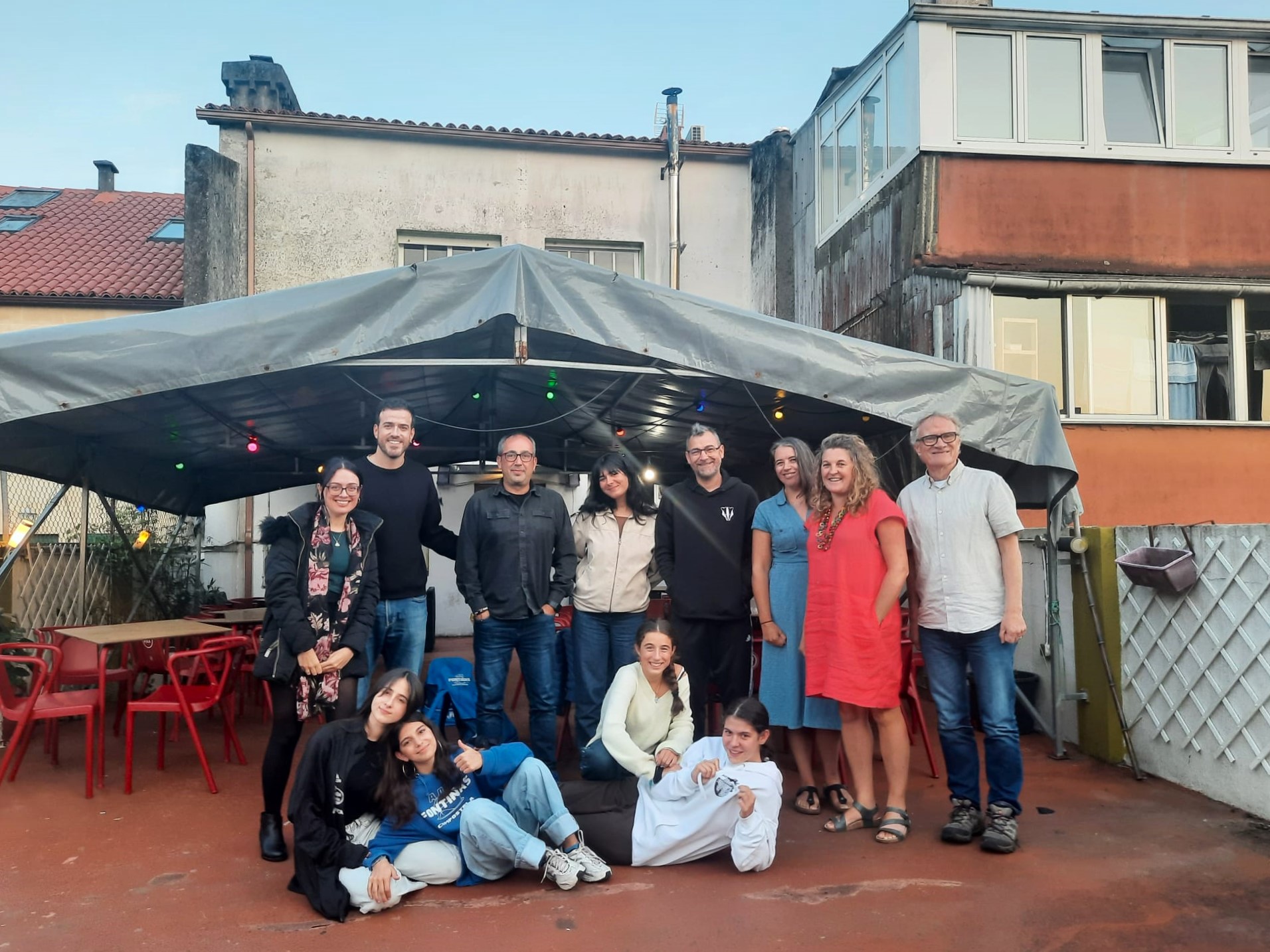
In the evening we met Santiago Quiroga, the coordinator of the Semente schools, and Sechu Sende and Manolo Maseda the leaders of the regueifa revival in high schools. We also met Nuria Penas, a young regueifa performer. Members of Regueifa Tour, a regueifa teen band, joined us and demonstrated their craft. Santiago, Sechu and Manolo talked at length about the place and purpose of the traditional art of regueifa for young people in contemporary Galicia. They talked about tensions within the regueifa community as the baton is handed from older male performers of previous generations to the younger female performers of today. We all joined in an impromptu regueifa improvisation with a translanguaging flavour. After a long day we slowly took our leave and headed off looking for something to eat.
Day Two
Saturday morning we went directly to Museo do Pobo Galego, where we visited a collection of objects from Galician society through time. A key feature of the collection is that it consists of domestic, personal, and ritual everyday objects crafted for specific purposes and functional uses, many of which had been long forgotten in lofts and attics. Costumes and musical instruments were in abundance, with particularly interesting collections of tambourines and bagpipes.
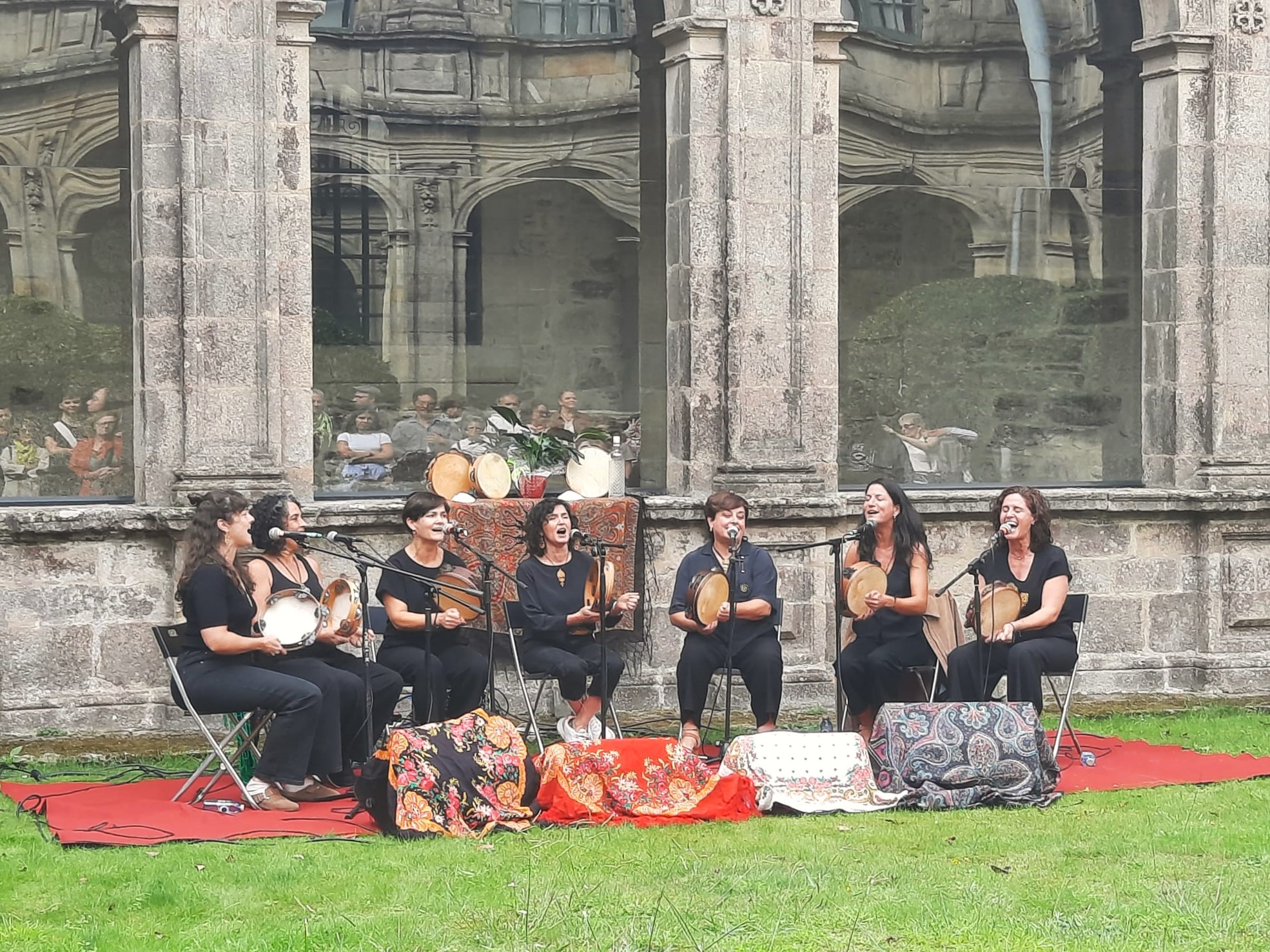
As we walked around the former monastery and gazed up at the spectacular spiral staircase we became aware that a musical event was setting up in the main courtyard. We went outside to watch a performance by Raigañas, a traditional percussion group. The all-women group collects, preserves and performs traditional music, particularly the musical heritage of Bergantiños. Not only was the performance of singing with tambourines hugely impressive, but sections of the audience joined in by taking to the dance floor to participate in (what looked like) co-ordinated traditional dance. Finally time was against us, and there were homes to go to. We left feeling enriched and still curious.

 MultiLX
Leave a comment