Mark Ryan
Across Europe, languages thrive in unexpected places — in the hum of a butcher’s shop, the rhythm of a regueifa performance, the motion of a training session, the glow of a phone screen in northern Norway. The MultiLX project examines these traces, documenting how minority languages are lived, felt, and reimagined in everyday life.
Through fieldwork across Turin, Galicia, Norway, Lucerne, Catalonia, and Berlin, MultiLX researchers have been sharing glimpses of multilingual worlds that challenge the idea of language as fixed or hierarchical. Instead, what emerges is a portrait of languages in motion — interwoven with art, activism, migration, sport, and memory.
Turin: Where Languages Flow and Histories Intertwine
In Turin, Marta Lupica Spagnolo and Gerardo Mazzaferro trace the movement of languages through neighbourhoods, shops, and performance spaces. Their reflections reveal a city where words are not just spoken but exchanged, negotiated, and reimagined.
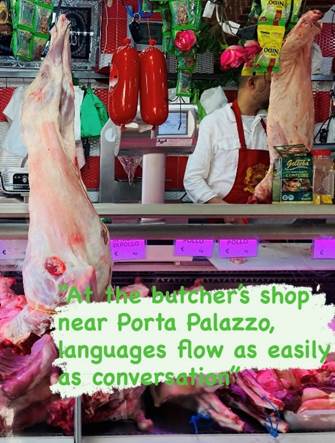
At a butcher shop near Porta Palazzo, “languages flow as easily as conversation.” Within Italo-Chinese families, communication bridges generations — sometimes uneasily, sometimes seamlessly. And in the work of performers like Valerie Tameu, art becomes a space to decolonise languages and bodies, transforming personal histories into collective reflection.
One participant recalls being “just 18, barely an adult, translating in a delivery room between doctors and a mother.” These stories highlight how language can be both an intimate responsibility and a site of resilience. As the researchers write, “We explored different paths and opened various doors” — an apt metaphor for what fieldwork itself can do: reveal connections that might otherwise remain unseen.
Galicia: A Place That Hugs You Back
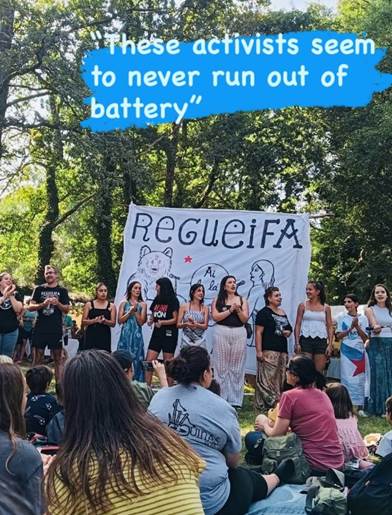
In Galicia, Paula Teixeira Moláns enters the world of regueifa, a form of improvised oral poetry that is both an art form and a vehicle of activism. Travelling by “car, bus or train,” Paula found herself among a tireless community devoted to language revitalisation and cultural continuity.
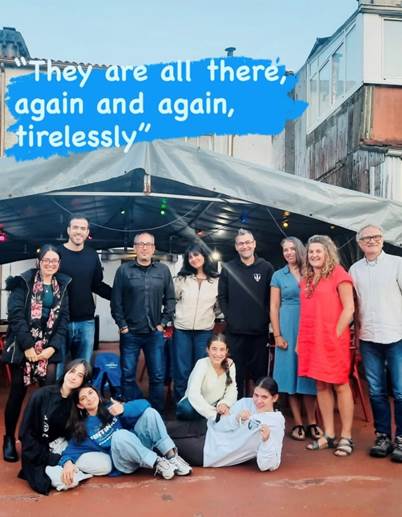
“These activists seem to never run out of battery,” she writes. “They are all there, again and again, tirelessly.” But what stands out most is the generosity she encounters: “They gift me with their time and open hearts.”
After nine years abroad, Paula’s fieldwork became something more than data collection — it became homecoming. “I felt like my country was hugging me with a ‘welcome back!’” she writes. Through her eyes, Galicia is not just a place of linguistic struggle but of emotional renewal, where language work becomes an act of love and belonging.
Norway: Finding Connection in a Dispersed Community
Further north, researchers M. Sepsim Simonsen, Vida Colliander, and Pia Lane explore how young Kven people navigate identity and connection across vast distances. “From Tromsø to Oslo, travelling is long and expensive,” one note reads.
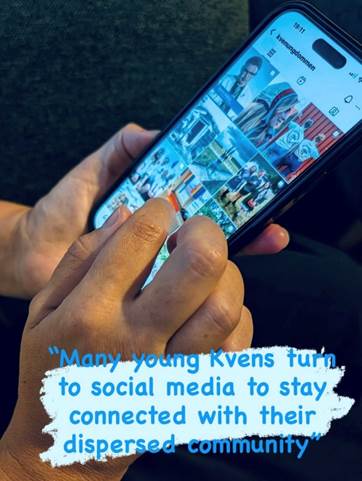
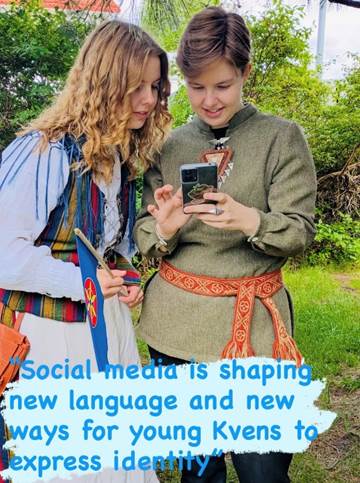
In this dispersed landscape, social media becomes a bridge, allowing young Kven people to “stay connected with their community” and to “shape new language and terminology.” Digital spaces, often seen as sites of disconnection, become crucial platforms for linguistic creativity and solidarity.
The team’s workshops are designed “not just for research” but as spaces where youth can participate naturally, adding their own voices to the evolving story of Kven identity. In their reflections, we sense both the challenges of fieldwork — the distance, the logistics — and the joy of witnessing new ways of belonging emerge online and off.
Lucerne: Embracing the Spiral
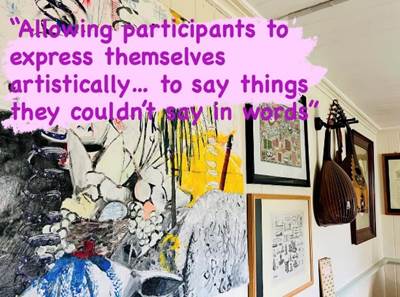
In Lucerne, researchers Victoria Wasner and Lindita Bakii reflect on the intersections of art and ethnography. For them, creativity isn’t an accessory to research — it’s a method of knowing. Allowing participants to “express themselves artistically… to say things they couldn’t say in words” opens new dimensions of understanding.
Their notes wrestle with ethical and epistemological questions: “Who owns participants’ stories?” and “How can research represent the messiness of reality?” The Lucerne team embraces the uncertainty of their approach, describing it as nonlinear — “more like a spiral than a straight line.”
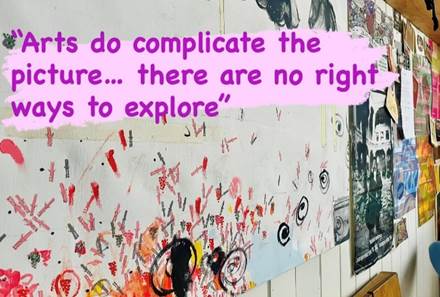
Within that spiral, complexity becomes a virtue. As they put it, “Arts do complicate the picture… there are no right ways to explore.” The spiral metaphor resonates across the MultiLX project — research not as extraction, but as co-creation, built on relationships and mutual learning.
Catalonia: Language in Motion
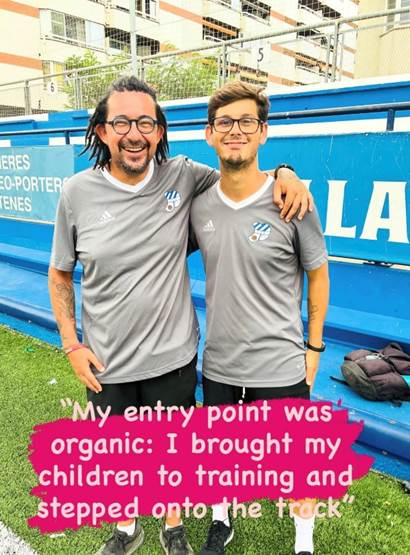
In Catalonia, the MultiLX team quite literally stepped onto the field. For Víctor Corona, the project began not in an office or archive, but through daily life: “My entry point was organic — I brought my children to training and stepped onto the track.” Working in collaboration with Europa Football Club and Òmnium Cultural, the team explores how language, sport, and belonging intertwine across Catalonia’s urban and linguistic landscapes.
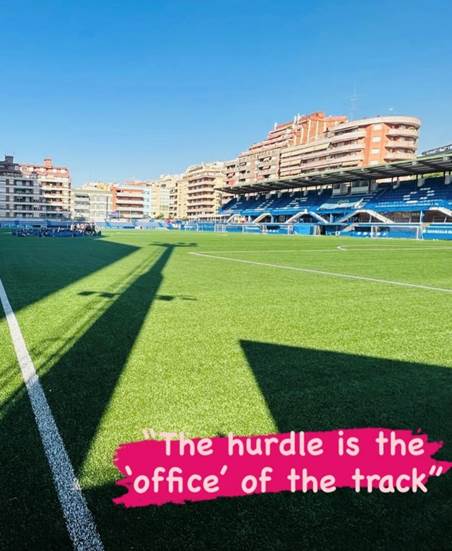
From the Club d’Atletisme Nou Barris to Europa’s summer camps, they observe how multilingualism unfolds in motion — “Catalan in public, Spanish in play.” On the track, language policy and lived experience meet in gestures, shouts, and shared routines. The hurdle, Víctor writes, becomes “the office of the track” — a place where relationships are built and meanings negotiated. As he reflects, “Everything is still to be discovered,” reminding us that fieldwork, like sport, depends on rhythm, trust, and the willingness to keep moving forward. In one vivid moment, a boy with autism sprints across the track, calling out “Mama, mira!” — a spontaneous celebration of joy and connection.
Berlin: Together Across Borders
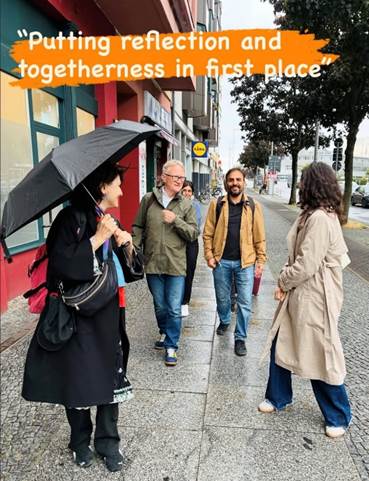
Finally, in Berlin, Katharina Brizic offers a portrait of collaboration in motion. Her fieldnotes capture what it feels like to “sit around one joint table, as if there had never been a whole continent in between.”
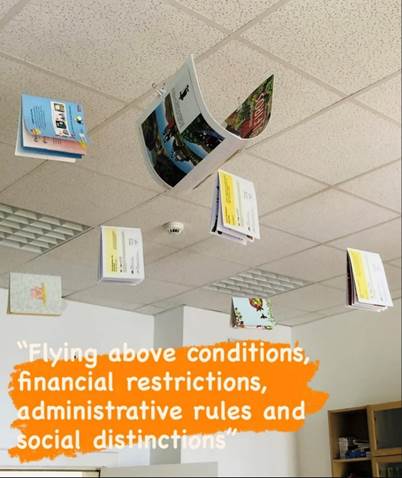
Working across countries and disciplines, the Berlin team embodies the collective spirit that drives MultiLX. Despite “financial restrictions, administrative rules, and social distinctions,” they keep “putting reflection and togetherness in first place.”
Their motto — “making everything from nothing” — speaks to the creative resilience that underpins so much of this work. In Berlin as in Turin, Lucerne, and elsewhere, fieldwork is as much about communicating, explaining, learning from each other as it is about collecting data.
Relationality, Creativity, and Collectivity
Across these diverse sites, certain themes recur. Relationality — the deep connections between researcher and participant, between past and present — anchors every story. Creativity surfaces again and again, whether through regueifa, art-making, or digital expression. And above all, there’s a collective ethos: language as something we build together.
MultiLX reminds us that languages are not only linguistic systems — they are lived practices that bind people and places in motion. The fieldwork conducted by MultiLX researchers already offers glimpses of an unfolding mosaic: communities negotiating belonging, scholars learning to listen differently, and languages finding new homes in unexpected spaces.
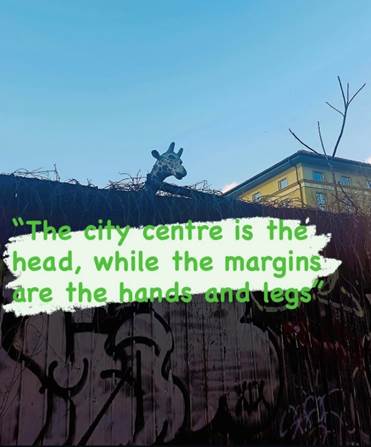
As one Turin researcher wrote, “The city centre is the head, while the margins are the hands and legs.” Perhaps that’s true of language itself: its vitality lies not in the centre, but in the movement, improvisation, and creativity of the periphery.
 MultiLX
Leave a comment