Pascal Schmidt
E quia suna uossa. Our da la fanestra in scola contaimpl eu las muntognas chi sun fingià cuvertas dad üna vetta da naiv. Suot il cunfin dal god mettan ils larschs d`or ün glüster chod sur la cuntrada chi sfuondra in üna glüsch d`or. Sur quella as stenda in tschêl blau profuond chi fa cumplet quist spectacul da la natüra.
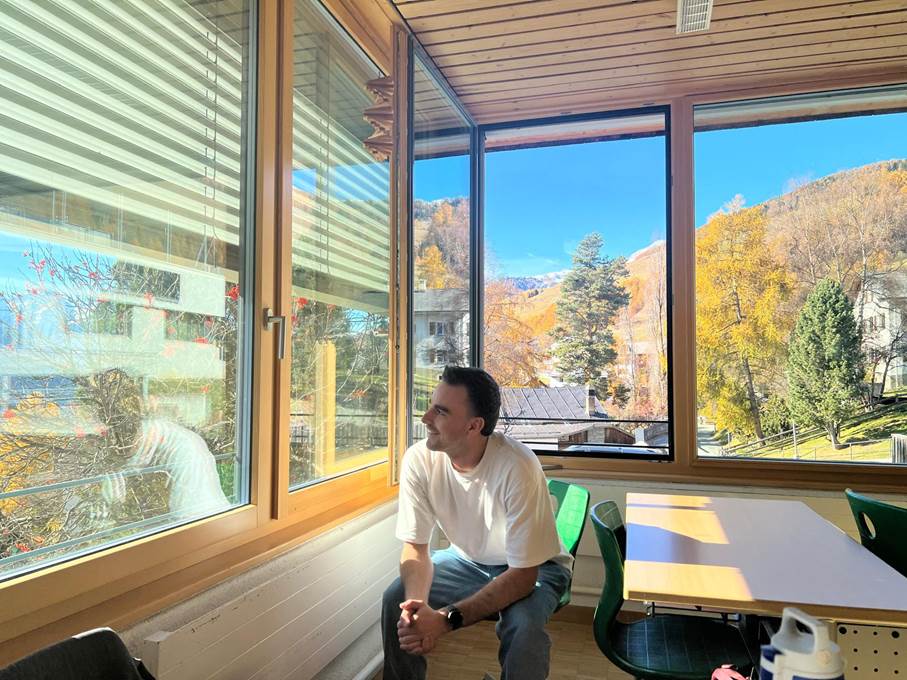
Eu dvaint melanconic e bad co ch`ün impissamaint am va tras il cheu, ch`eu nu vess amo pudü chapir avant desch ons: “Quist lö derasa üna tala calma ch`eu saint meis battacour chi dvainta adüna plü plan. Quist sentimaint romantic d’üna vita quieta manca a mai”.
Cur cha meis frars plü vegls vegnan a chasa la fin d’eivna, vana pel solit sün nossa terrassa. Els respiran l’ajer frais-ch da muntogna, saintan ils razs da sulai chods in fatscha e guardan – uschè sco eu uossa – süllas majestusas muntognas. Hoz discha svessa: “Quai sun mias ragischs. Quist es mia patria”.
Quist ambiaint, quista natüra es colliada fermamaing culla lingua rumantscha. Ella represchainta per mai güst quistas emoziuns, quista quietezza, quistas valurs. Ella fa part da mia cultura. Hoz am saint`eu privilegià ch’eu n`ha pudü crescher sü in quist ambiaint. Eu passaint adüna darcheu discuors interessants davart mia derivanza, forsa güst perquai cha nus essan uschè pacs rumantschs. Sco perscrutader suna uossa in ün’otra rolla in quista scoula. Quai vpul dir per mai üna sort sfida. Eu n`ha l’incumbenza da perscrutar mia lingua materna, mia patria, mias ragischs. Eu vegn uossa consciaint quant important cha nossa lavur i`l team da perscrutaziun es per la lingua rumantscha, o da principi per linguas minoritaras. Persunas chi realiseschan perscrutaziun cun la lingua rumantscha as podaraja probabelmaing dombrar cun dus mans. Tant daplü am sainta oblià da dar inavo alch a mia lingua materna, a mia cultura, a mia patria.
I suna il sain da scola, ils uffants siglian in stanza da scoula. Eu observ las fatschas dals singuls uffants. Culls impissamaints inclur oter am vegn immaint l`istorgia da las randulinas rumantschas. Las randulinas sgolan al cumanzamaint d’utuon in Africa, perquai ch’ellas nu chattan plü nudrimaint, fin ch’ellas tuornan la prümavaira darcheu a chasa per pudair cuar. Sco persuna rumantscha as esa per part eir sforzà da bandunar la patria per üna scolaziun o per ün stüdi. Fin al di da retuorn, sco sch’üna forza magica ans portess darcheu inavo. Tschertüns tuornan, tschertüns restan davent. Üna part da la patria portaina adüna cun no, nossa lingua materna.
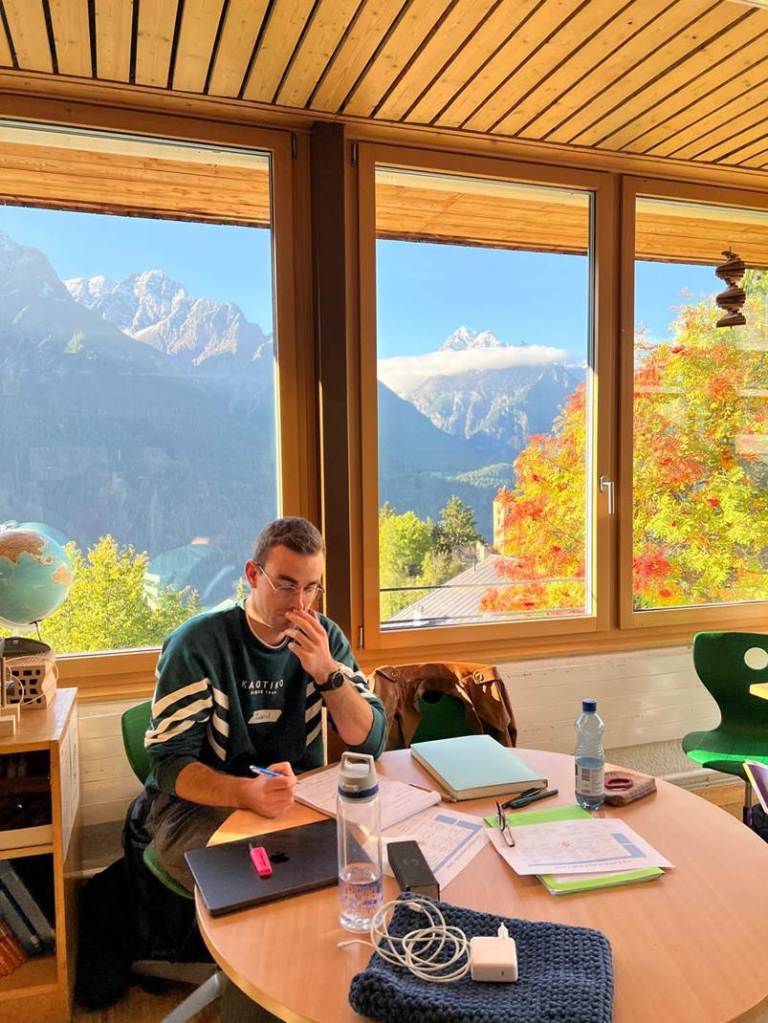
Sco fingià nomnà, sainta üna conscienza da dar inavo alch a mia lingua materna per tilla pudair laschar exister inavant. Eu nu sun tuornà in mia patria sco üna randulina, mabain restà davent. Forsa sarà meis dovair da contribuir cun mia perscrutaziun ün ulteriur sustegn per cha mia lingua materna possa surmuntar in quist muond actual plain sfidas.
Larch Trees and Swallows
And here I am now. From the school window, I gaze at the mountains, whose peaks are already covered with a thin layer of snow. Below the tree line, the golden larch trees cast a warm glow over the landscape, bathing the mountains in golden light. Above, a deep blue sky stretches out, completing this natural spectacle.
I become melancholic and catch myself thinking something I couldn’t have understood ten years ago: “This place radiates such tranquility that I can almost feel my slower heartbeat. I miss this romantic feeling of a quiet, carefree life.”
When my brothers, who are 13 and 14 years older than me, came home on the weekends, they would go out onto our terrace. They would visibly breathe in the cold, fresh mountain air, feel the warm rays of the sun on their faces, and gaze—just as I am doing now—at the majestic mountains. Today, I say to myself: “These are my roots. This is where I come from.”
This environment, this nature, is closely linked to the Romansh language. For me, it embodies these emotions, this tranquility, these values. It is an integral part of my culture. Today, I feel privileged to have been able to grow up in this environment. I often have fascinating conversations about my origins, perhaps because there are so few of us. As a researcher, I now find myself in a different role at this school. This presents a kind of challenge for me. My task is to research my mother tongue, my homeland, my roots. I am now realizing how important our work in the research team is for the Romansh language, or for minority languages in general. Researchers who themselves belong to the Romansh culture can probably be counted on two hands. This makes me feel all the more obliged to give something back to my mother tongue, my culture, my homeland.
The school bell rings and the children rush into the room. I look into each child’s face. With my thoughts still somewere else, the story of the Romansh swallows pops into my head. Swallows fly to Africa in early fall because they cannot find food until they return to their breeding grounds in spring. As a Romansh speaker, you are also forced to leave your homeland at a young age to pursue education or studies, until one day, as if by magic, you return. Some do that, some stay away. But you always carry a part of your homeland with you: your mother tongue.
As already mentioned, I feel a sense of duty, a kind of pressure to give something back to my mother tongue in order to keep it alive. I did not return to my homeland like a swallow, but stayed away. Perhaps through my research I will be able to contribute to my goal of providing further support so that my mother tongue can continue to survive in today’s challenging world.
 MultiLX
Leave a comment