Mark Ryan, Sari Pietikäinen
Miten tutkijat voivat tutkia monikielisyyttä eettisesti ja tehokkaasti digitaalisten alustojen ja tekoälyn muovaamana aikakautena? Tämä kysymys oli keskiössä MultiLX-hankkeen toisessa koulutustapaamisessa, joka pidettiin verkossa 26. syyskuuta 2025 ja jonka järjestivät yhdessä Limerickin yliopisto ja Jyväskylän yliopisto. Tapaaminen tarjosi sekä käsitteellisen syväluotauksen että käytännönläheistä yhteistyötä hankkeen omien monikielisten tutkimuskäytäntöjen parissa.
How can researchers study multilingualism ethically and effectively in an era shaped by digital platforms and artificial intelligence? This question lay at the heart of the second training meeting of the MultiLX project, held online on 26 September 2025 and jointly hosted by the University of Limerick and the University of Jyväskylä. The meeting offered both a conceptual deep dive as well as hands-on collaboration around multilingual research practices within the project itself.
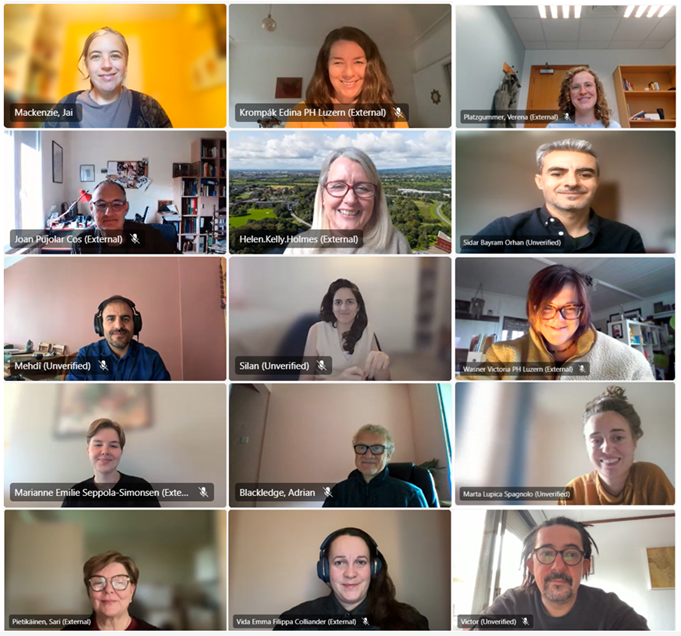
The training day invited project members to grapple with the ethical, methodological, and practical implications of using digital tools, and opened with a critical exploration of the promises and pitfalls of AI for multilingual research. Participants discussed how LLMs, while often presented as neutral or universal, are shaped by deep linguistic, cultural, and geopolitical biases. Languages with fewer digital resources tend to be poorly represented, placing additional labour on speakers and researchers who want these languages to be visible in digital systems. At the same time, AI tools can offer new opportunities: creating spaces for “stateless” or marginalised languages, enabling alternative forms of dissemination, and reducing some of the time-intensive burdens of linguistic research.
Ethical questions ran through these discussions. How can researchers balance efficiency with responsibility? What are the environmental costs of AI-driven research? And how do issues of privacy, consent, and data extraction become sharper when working with minority language communities? Rather than offering simple answers, the session emphasised conscious use—and non-use—of AI, foregrounding human agency and reflexive decision-making.
The second session focused on the research tools developed within Work Package 4 (WP4) of the project. WP4 investigates young people’s experiences with AI across multiple European contexts, making language choice a central methodological concern. While the project is committed to linguistic inclusivity, digital platforms and questionnaires require choices. Which languages should be prioritised? How can mixed and translanguaging practices be acknowledged in instruments that are, by nature, relatively rigid? These conversations revealed the political economy of language in digital research. Decisions about “relevant” languages are never neutral: they affect participation, trust, and the distribution of linguistic labour within research teams. Participants stressed the need for flexibility, transparency, and ongoing reflection, rather than one-size-fits-all solutions.
The final session offered a hands-on examination of how digital translation tools and LLMs were used to localise WP4 research instruments. Working in breakout groups, participants reviewed different language versions of the project’s questionnaire, assessing accuracy, tone, and cultural appropriateness. The exercise made one point abundantly clear: while automated translation can be a powerful support, it cannot replace human expertise. Especially for smaller or less-standardised languages, effective localisation requires deep contextual knowledge and collaborative scrutiny. Beyond its substantive outcomes, the meeting also prompted reflection on the format of digital collaboration itself. Hosting the training online reduced travel and environmental impact and enabled broader participation, but it also required more structured facilitation and “thinking through” the technology. Digital spaces, participants noted, shape not only what we discuss, but how we listen, respond, and collaborate.
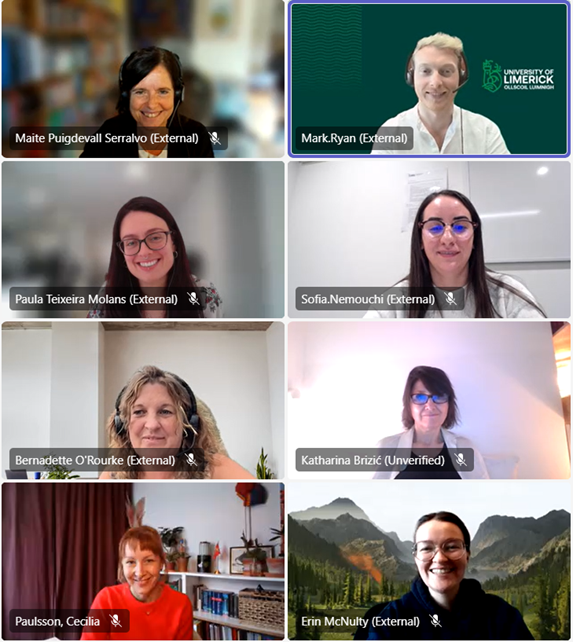
Ultimately, the second MultiLX training meeting reinforced a central insight: multilingual digital research is not simply a technical challenge, but an ethical and political one. Supporting linguistic diversity in a globalised, technologised world demands resources, care, and a willingness to question the tools we so readily adopt. By creating space for collective reflection and experimentation, the meeting marked an important step in MultiLX’s ongoing effort to strengthen European linguistic capital—without losing sight of the people, languages, and communities at its core.
 MultiLX
Leave a comment