The case study “Multisemiotic Turin” brings us to Porta Palazzo in Turin (Italy), one of Europe’s largest open-air markets and one of the city’s most linguistically diverse corners, where people from different linguistic, cultural, religious, migratory, and culinary backgrounds meet daily. Every morning here, a small halal Moroccan butcher shop opens its shutters onto a street already humming with life.
As a researcher in the MultiLX project, I’ve spent several weeks, spread between March 2025 and May 2026, in this butcher’s shop at Porta Palazzo, following its workers and customers to understand how people communicate across languages in everyday urban settings: through words, of course, but also through gestures, gazes, bodies, and objects.
What I did not expect, when I started, was how often that research would lead me to see what usually goes unseen, and find beauty in unexpected moments.
Inside the shop, many languages, dialects, and registers coexist with ease. The butchers greet customers in Moroccan Arabic, Italian, and French, then keep the conversation going by reaching for Bengali or Piedmontese words, or by drawing on other linguistic resources, such as Greek or Turkish, they’ve picked up along their own migration journeys to Italy. Customers, in turn, adapt just as readily, tossing back a word or two of Arabic, regardless of what languages they speak at home.
But languages aren’t only mobilised in the physical space of the shop. Somewhere behind the counter, a phone is ringing with a video call from Berlin or Marrakesh, while TikTok is jingling its slogans slipping between English, Spanish, and German. Communication here rarely relies on speech alone: it blends gesture, gaze, movement, objects, screens, and the physical environment itself.
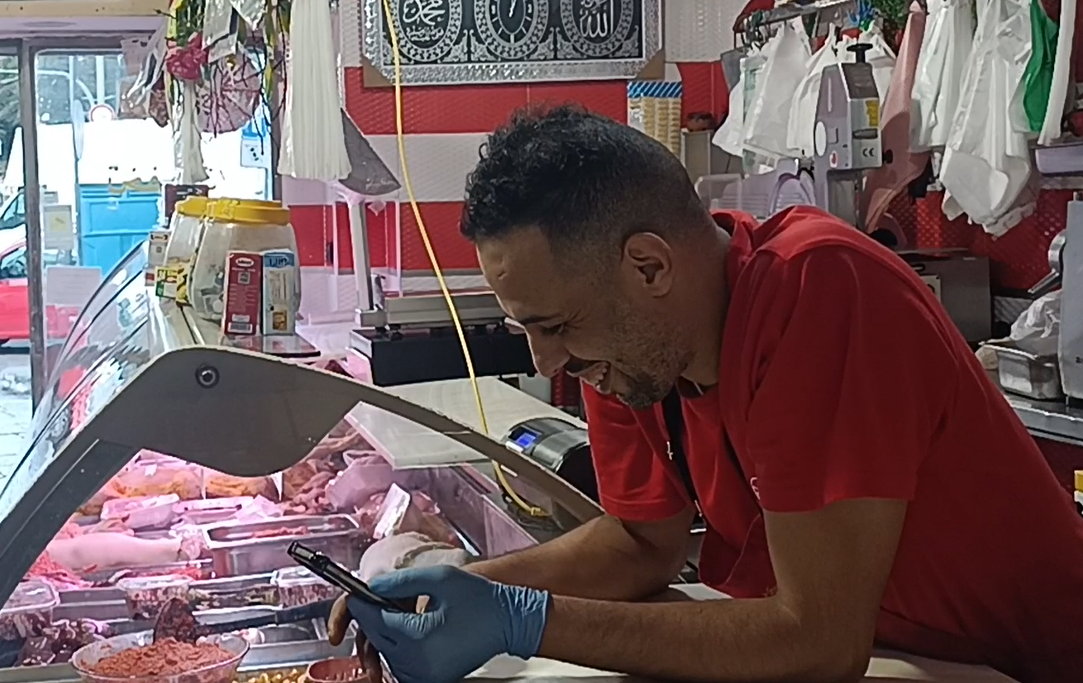
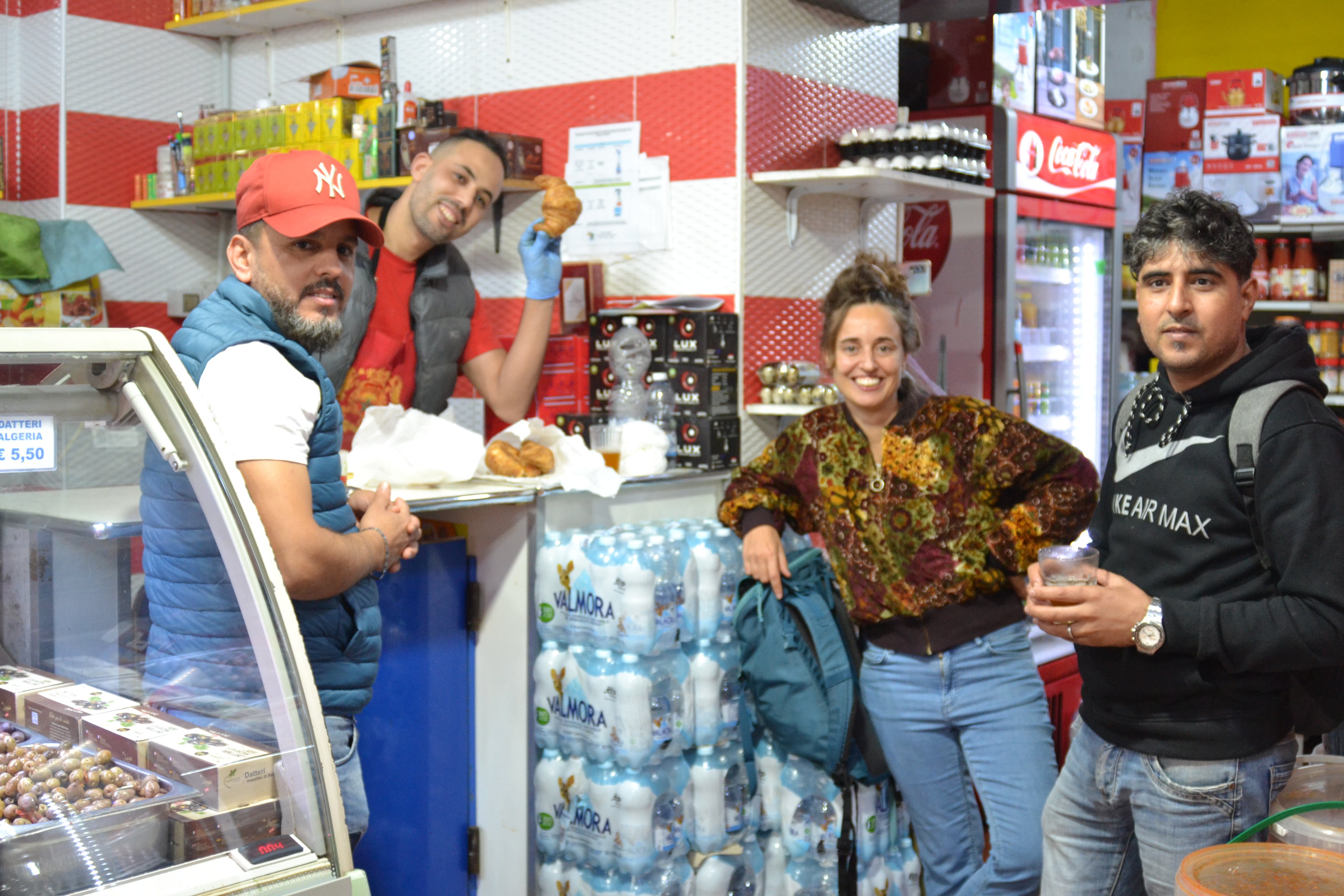
In fact, the shop is not only a place of commerce. It doubles as a social space where relationships are built, knowledge is shared, and communication extends far beyond words. So, it becomes, for instance, a spontaneous meeting point for a group of friends who drop by after work to joke and share a glass of tea, or to ask for help finding an apartment, or to celebrate a wedding. One family even travelled 115 km from Aosta (another city near the French border), and ended up spending almost an hour in the shop, shopping, chatting, laughing, and greeting other customers.
Throughout the fieldwork, I was consistently received with kindness and generosity. Waiting emerged as a recurring experience in the shop: waiting for customers to arrive on slow days, waiting while customers decided what to purchase, waiting for deliveries. Interestingly, the relationship between observer and observed proved reciprocal. One of the butchers, for instance, turned the camera on me during one such moment of waiting: a small reminder that, at some point, the butchers started observing me back, turning their own gaze toward the researcher watching them.
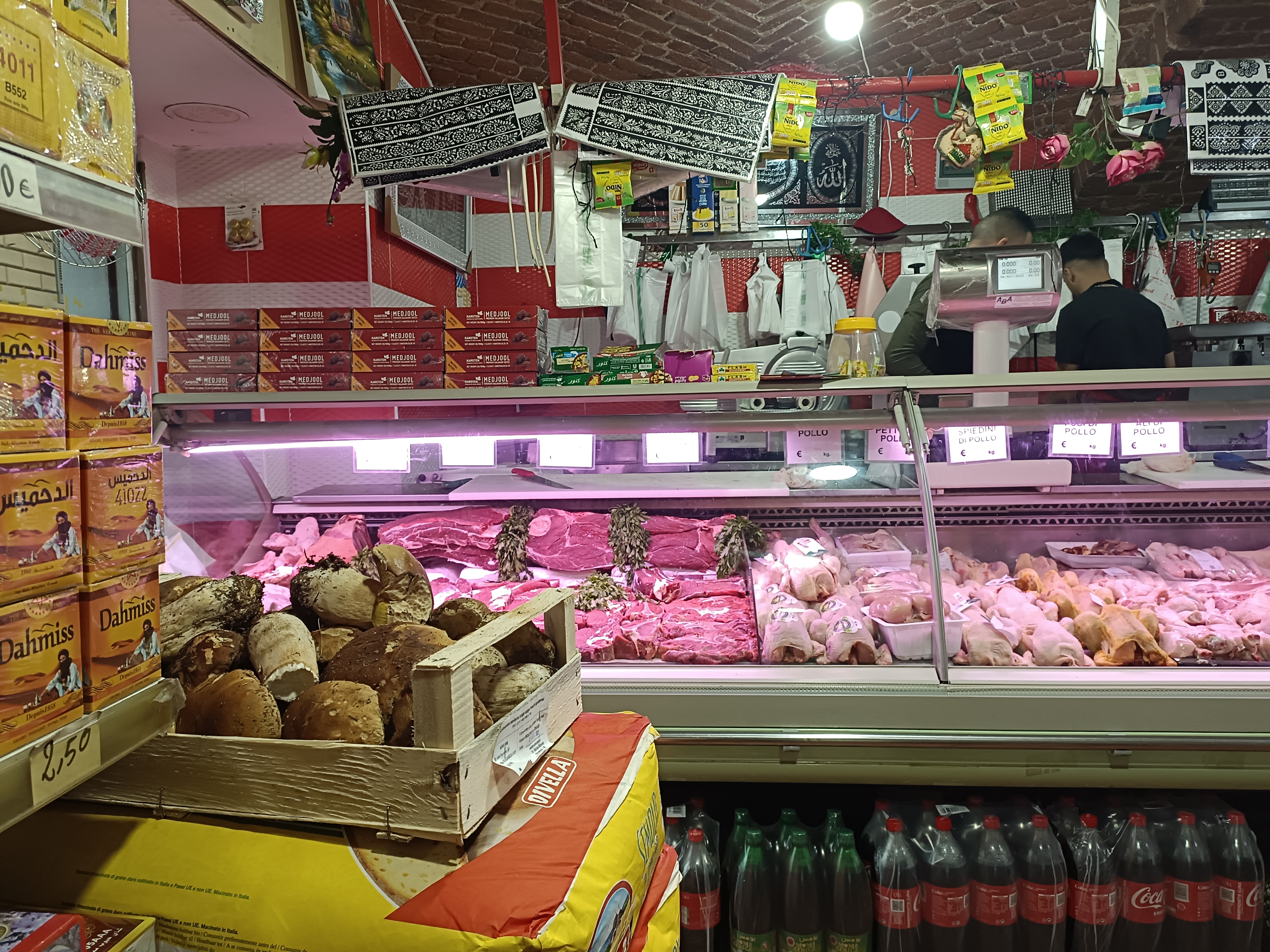
To pass the time, I would watch the butchers at work: cutting, grinding, wiping down the counter, arranging the goods in neat rows. It’s a trade that’s slowly disappearing, but one that demands a lot of skill and artistry. The shop’s longest-standing butcher once told me that it took him a year or two to learn the trade properly, alongside acquiring Italian in the workplace. Since then, he added, he has helped many young Moroccan workers, who came through the shop over the years, learn the trade and the language in the same way. Often it looks like nothing is happening at all; and then, suddenly, everything happens at once: a non-Arabic-speaking customer walks in, and the young butcher, who arrived in Italy four months ago, has to handle it alone, since the older butcher is downstairs in the cold storage room.
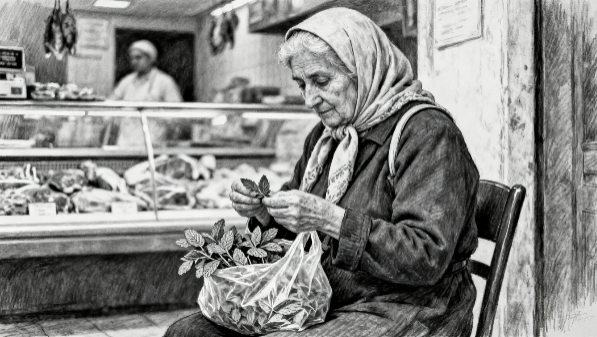
I also noticed how physically demanding the work is. Despite their ease with the knife, even expert butchers occasionally cut their arms, drawing blood. It is hard work, full of materiality, (dead) bodies, and blood. Yet, alongside this roughness, moments of unexpected beauty keep surfacing: the way, every single morning, the counter is carefully prepared, a process that takes at least an hour, dressed with fresh mint leaves and, on one particular day, a crate of porcini mushrooms, freshly brought from the market after the rain.
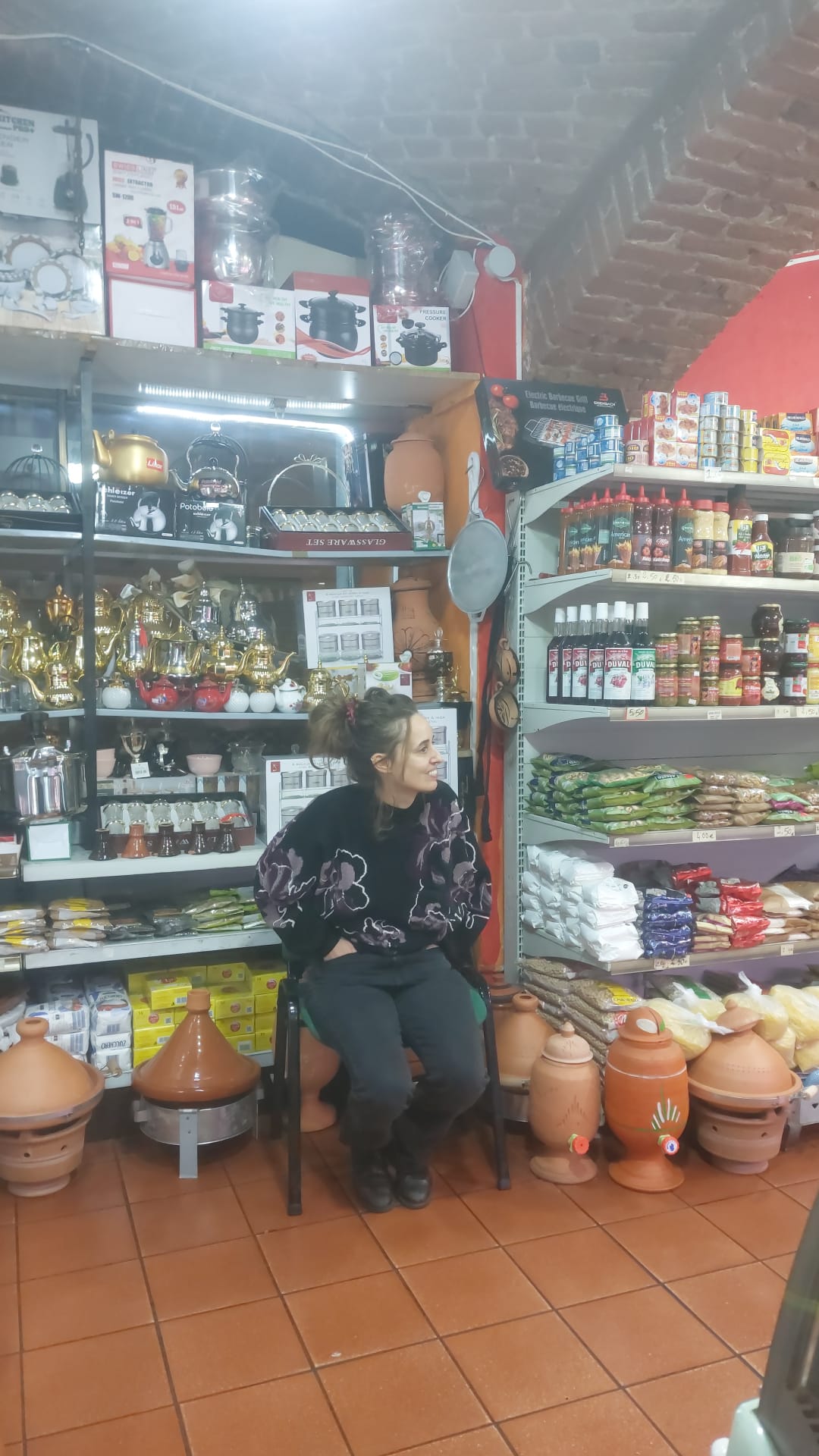
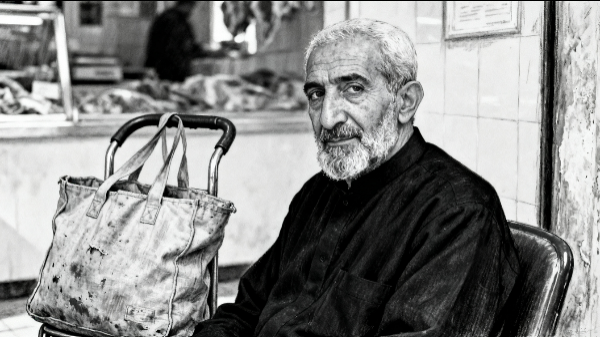
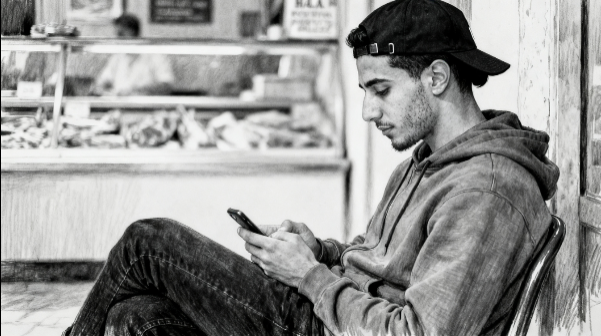
As a last detail, a chair offers a fitting image for the researcher’s presence in the field. Placed there by the butchers at the beginning of the fieldwork so I would have somewhere to sit while observing, the chair was never removed after my visits. Over time, it became part of the material landscape of the shop: elderly customers rest on it when they come in; sellers from the informal street market around Porta Palazzo use it to lay out their goods, mint or t-shirts, while they check their stock; friends of the butchers sit on it scrolling through Instagram or TikTok. In this way, the chair remains a small but tangible trace left by my fieldwork in Porta Palazzo.
Acknowledgements
A huge thank you to the butchers and their friends, whose names remain anonymous to protect their privacy, for opening the doors of their shop and their lives to me. Many thanks also to Emanuele Maspoli of the network of Porta delle Culture for introducing me to them.


Leave a Reply